
How I Saved 40 Hours a Month: A Real SLP Now Membership Review & Workflow
Quick Summary: I sat down with Mary, a 15-year school SLP, to talk about school SLP productivity. By overhauling her paperwork and planning process, she stopped bringing work home entirely. Here is a look at the system that gave her back 40 hours every month.
I talk to a lot of SLPs who are doing everything right. They’re organized enough. They care deeply. They’re working hard.
And they’re still staying late.
Still catching up on documentation after school. Still prepping on Sunday nights. Still bringing home a stack of papers they swear they’ll get to.
That’s not a character flaw. That’s a systems problem.
I got to sit down with Mary, a 15-year school SLP with 43 students on her caseload, including autism self-contained classrooms and a general mix of speech and language students. She used to be in that same place.
Now she almost never takes work home. She saves an estimated 40 hours a month. And she’s running 6 to 8-week literacy-based therapy units with student-produced final projects.
Here’s what changed.
The SLP Documentation System Problem Nobody Talks About
Mary had a system before SLP Now. It just wasn’t a very efficient one.
She’d build a Word document for each day with all her students listed out. She’d print it, take data by hand, then go back and type everything up into a note at the end of the day or end of the week. It worked. Sort of.
But if a student was absent and someone else needed a makeup session, she had no sheet for them. She’d scribble on the side of whatever she had. Or forget to log them at all. If her schedule shifted mid-week, the paper system didn’t flex with it. If she forgot to write the date on a sheet, she’d be guessing later: wait, was that Tuesday or Wednesday?
And then there was the note-writing itself. Taking all those handwritten data points and turning them into a typed session note takes time. Every single day.
“Between making the little sheets, collecting data on paper, and then typing everything up, it adds up fast,” she told me.
She estimated that documentation, planning, and materials prep were consuming somewhere between 30 and 40 hours a month outside of her contract time. That’s almost a full extra week of work. Every month.
What a Real Documentation Upgrade Actually Looks Like
When Mary started using SLP Now, the shift happened in stages.
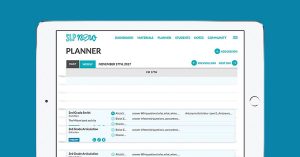
First, she stopped making paper templates. Her students’ goals were already in the new SLP documentation system. She could pull up a session, take data directly, and generate a note from there. No printing. No retyping. No scribbled sidebars when a schedule changed.
“I can just copy and paste my notes into whatever district system I need,” she said. “It’s so much faster.”
The flexibility mattered too. When a student got added last-minute, Mary wasn’t scrambling. She could pull them up, document the session, and move on. She also mentioned a feature she’s been waiting on: a way to see a student’s last session data right alongside the current one, so she can track session-to-session progress without digging through reports. That kind of incremental improvement is exactly why she’s stayed on the platform for years.
“It’s always growing, always improving,” she said. “I’m not putting my time and energy into learning something that’s not gonna work for me in two years.”
Why This Isn’t Just a Materials Library
During our chat—which honestly doubled as a candid SLP Now membership review—Mary was honest about her initial plans: she originally planned to try SLP Toolkit after her first year. She wanted to do a side-by-side comparison and pick the best option. She never made the switch.
Not because she didn’t look. But because SLP Now kept giving her more than she expected.
“I like the materials, but what kept me was the planning tools and the courses,” she said. “I just didn’t feel like that kind of stuff was as present in what I saw elsewhere.”
This is something I hear a lot, and it matters. SLP Now isn’t just a place to download therapy materials. It’s a complete SLP therapy planning system. It has caseload management support. And it has an academy with professional development courses built specifically for school-based SLPs.
For Mary, two courses made a particularly big difference.
How Two Academy Courses Changed Her Entire Therapy Structure
Before she found the courses on therapy session structure and unit planning, Mary was doing what a lot of school SLPs do. She’d pick an activity, make it work for whatever goals her students had that day, and call it good.
It worked. But she knew it wasn’t her best. Then she watched the academy courses inside SLP Now on structuring therapy sessions and planning units. And something clicked.
“That’s why I started doing the 6 to 8 week units,” she told me. “I like it a lot.”
Here is what her therapy looks like now:
- Cohesive Themes: She runs cohesive literacy-based therapy units where everyone in her caseload is working within a shared theme, even if their goals and materials look different. Her K–2 autism classroom might be working on emerging communication with transportation-themed materials, while her 4th and 5th graders might be doing a science experiment unit. Same season, different activities, all planned in advance.
- Student Projects: Every unit ends with a student-produced final project. Something they can show their parents. Something that feels like an accomplishment.
- Rotating Unit Bank: She’s working toward a three-year rotating unit bank. No student ever repeats an activity, and she never starts from scratch.
She’s even planning to have her 4th and 5th graders teach a science experiment to their general education class as the unit capstone. That’s not just a time-saving move. That’s deep, purposeful therapy. Students have to know something well enough to teach it before they can go do that.
What 40 Hours a Month Actually Gives You Back
I asked Mary what she does with the time she saves, and her answer was a perfect picture of true school SLP work-life balance.
“I make a nutritious dinner every night,” she said. “I get to be home and have work be work.”
She has two kids, ages five and six. Her daughter goes to the same school where she works. Her son will be there next year. For her, learning to save time as a school SLP isn’t just about productivity. It’s about being present.
The documentation used to follow her home. Now it stays at school.
“I almost never take work home,” she said. “Like, almost never. That used to feel impossible.”
What She’d Tell a Skeptical SLP
I asked Mary what she says when she tries to convince a friend to try SLP Now. Her answer was practical and direct.
“You’re already going to be buying stuff on Teachers Pay Teachers and subscribing to little online games,” she said. “Add it up. Between that and the fact that you buy games now and then for work, you’re already there as far as the cost.”
Then she said the quiet part out loud: “You’ll save money and save time. You’re better off.”
She’s tried to convince one friend in particular who works halftime. The friend hesitates because she’s only part-time. Mary’s response: that just means the time savings are even more significant as a percentage of her work week.
The System Behind the Change
Here’s what I want you to take away from Mary’s story. She didn’t get her evenings back by working harder. She didn’t burn through a massive onboarding process. She didn’t overhaul her entire practice in a weekend.
She found a better system. She used it. She kept using it because it kept getting better.
Documentation that generates itself from the data she’s already collecting. Courses that actually shifted how she structures therapy. Planning tools that let her think four to six weeks ahead instead of session to session.
If you’ve been telling yourself that staying late is just part of the job, I want to gently push back on that. It doesn’t have to be. The job is hard. The caseloads are real. But the difference between SLPs who leave on time and SLPs who don’t is often the system, not the caseload size.
Try SLP Now Free for 14 Days
If Mary’s story sounds familiar, the best next step is to see it yourself.
SLP Now offers a free 14-day trial with no credit card required. You get full access to the platform including therapy materials, planning tools, caseload management features, and the academy courses that changed how Mary structures her therapy.
Try it. See what 40 hours a month could look like for you.




Leave a Reply