• Skip to primary navigation
  • Skip to main content
SLPNOW_Logo_Color
  • For SLPs
  • For Districts
  • Success Stories
  • Resources
    • Blog
    • Podcasts
    • SLP Goal Bank
    • Speech Therapy Tools
    • Contact
  • Pricing
Login
Free Trial

Marisha

#068: Curriculum-Based Therapy Bootcamp – Teacher Communication

November 12, 2020 by Marisha Leave a Comment

Listen on Apple Podcasts Listen on Spotify

Want to hear more about this topic? Click here for all things curriculum-based therapy!

This Week’s Episode: Curriculum-Based Therapy Bootcamp – Teacher Communication

This week we’re going to keep on keeping on with curriculum-based therapy. This episode breaks down a Curriculum-Based Therapy framework for practice, plus some time saving tips on how to handle teacher communication and showcase your value as an SLP.

Let’s be honest — it can be daunting at times…but it doesn’t have to be!

Grab your favorite beverage and let’s get to it!

Subscribe & Review in iTunes

Are you subscribed to the podcast? If you’re not, subscribe today to get the latest episodes sent directly to you! Click here to make your listening experience auto-magic and as easy as possible.

Bonus points if you leave us a review over on iTunes → Those reviews help other SLPs find the podcast, and I love reading your feedback! Just click here to review, select “Ratings and Reviews,” “Write a Review,” and let me know what your favorite part of the podcast is.

Thanks so much!

Transcript

Transcript
Email Download New Tab

Let's talk about a little bit of a framework to make this possible and implement this with our students. Because this can be very overwhelming to tackle, especially given some unique changes in service delivery this year. So we'll kind of chat through that and go through some different ideas.

So we've got three components that we'll go through. The first one is teacher communication, because we need to access the curriculum in some way. Then we'll talk about how to organize our materials and plan for therapy. And then, one very, very common concern is, "I'm not a tutor. How am I going to be therapeutic using the curriculum?" We'll talk about some strategies and some little frameworks that we can use to set ourselves up for success in those areas.

First step is teacher communication. I've actually gotten a hand in the face from an educator. So I just want to share that it's not always ... It is going to be a challenge. Some teachers are easier to communicate with and collaborate with than others. We're all very busy. We're all very stressed. We all have huge workloads. If something is unknown, it can be scary. Sometimes we just don't want to give it the time of day. That's not a reason to give up though, because like I said before, we are in this for our students and we want to do what's best for them. So even if a teacher puts a hand in our face, or whatever hurdles we come across, we are problem solvers, and we can figure this out. It's not a reason to give up. Our students deserve our best. It's also a good opportunity for us to grow and just develop, further develop as professionals. Yes, it can be challenging. I've experienced it myself, and I've heard a lot of other SLPs share experiences, but we've got this. Even if they say no, even if they're rude, we have lots of tools that we can use to figure out what we ... to work around it and to really show up for our students.

Some things that we can do, and I'm throwing out a bunch of different ideas here, you get to decide what feels most comfortable for you, what seems to doable, and just start in a place that feels just maybe a little bit scary, and just step a little bit out of your comfort zone and then just build on that over time. I just started out. I don't know, I just started out big. The first thing that I did was, I guess I had a of couple experiences, like I told you about the visuals and things like that. So I dabbled one-on-one with some teachers. But after diving into this research and realizing how big of an impact it could have on my students, I just wanted to go all in and I wanted to make this happen as quickly as possible for as many students on my caseload as possible.

So I decided to present at a staff meeting, because it was the fastest way for me to access all of the teachers, share a consistent message, and just address everyone at once, let them know where I stood, what I had to offer, and then go from there. But I definitely was scared. I was not comfortable with public speaking, especially as a CF. I did not feel like an expert, but I got to fake it until I made it. I just, I prepared to the best of my ability. Even though my hands were shaking, I showed up, I did it, I shared my message with the teachers. Some of them responded and some of them didn't. But it set that foundation for me to work off of.

What I did, some things that I ... you can present, or if you just want to start off sharing what a speech therapist does, that's an option. When I went, I, because I had already done a little bit of ... I introduced myself. I shared what I can help with. So at this meeting, I just shared a couple, the examples of things that I was able to do. I said that I really wanted to provide better services, the best possible services for students, and that I needed the teachers' support, and that I would really like to use materials from the classroom, and just requesting that they share. I did go up to each teacher afterwards to come up with a plan, but I just asked them to start thinking about areas that I could support.

After that meeting, I followed up with the teachers and I printed ... My IEP system, both districts that I worked in, they gave me the option to print an IEP-at-a-glance. This became my routine. At the beginning of every school year, I would print off all of the IEP-at-a-glance sheets for all of my students. I would put them in a red folder, and then just marked it confidential. I created a little sign out form. So I went to the teacher with the IEP-at-a-glance, so they could know which students in their class were, one, receiving services, and what the students were working on. Then I would just quickly go through that, and I would just have the teacher sign it to let me ... and I would just tell them that this is confidential paperwork. It's really important that they keep good track of it. I told them that I would come collect it again at the beginning of the school year.

I did this because well, one, it is confidential and they did need to keep it secure, keep that information secure. But then also, I just wanted teachers to take ownership of that. Then it happened a couple times where the teachers said they had no idea what we were working on, or that they had no idea my students were even being seen for speech therapy services. So by doing this at the beginning of the year or whenever, like we're almost halfway through the school year now. The first time I did this, it was probably around this time that I did, I started sharing that IEP-at-a-glance. But just having them sign and putting it in that like stand-out type of folder, made a really big difference. It just flagged something in their brains of like, "This is important. She's telling me about this. I need to make sure I keep track of this." It didn't work for every single teacher, but it definitely made a notable difference, going through that process.

So I shared the student's goals. I would just give them a quick update of where the students were. Then this would be, this could be an opportunity for the teachers to let me know what the students were struggling with in the classroom. And then we could use that to determine what we wanted to focus on. With one teacher, I had several students in her class. I brought the IEP-at-a-glance sheets, and we went over them. The grade's professional goal was to work on math word problems. That was something, they had set a professional learning goal or whatever the goal, whatever their goal is called. They had to set a goal as a group, and they wanted their students to work on that.

So I was like, "Awesome. Let me support that." Because that's something that they were very motivated to work on. And the students that I was seeing were the ones that were most likely to bring down like their averages or whatever. So when I offered to help, they were like, all of the teachers were like, "Oh, okay. We're going to share these with you, and we're going to come up with a strategy to work on this together." So that's one tip that I have to share, is figure out if they have any personal or, well, professional goals, whether they're officially stated, like to the principal or whatnot, or if there's just something that they want to work on. Really tapping into what's important to them can make it a lot easier to set up that collaboration, because they have some skin in the game. If I'm just requesting materials and they don't have a good understanding of why, or if they don't feel like it'll benefit them, it's much more likely to get ... they just will not share it then.

So I think, I mean, they obviously care about the students. They want their students to be set up for success, and that's oftentimes enough. But if it's something that they're actively working for, and these teachers had to submit evidence showing that they collaborated and did things to work towards this goal. So I was helping them with that. Every week on the dot, they shared their word problems and we did send back and forth. We got to work on vocabulary, we got to work on, the board problems had W-H- questions in them. We got to work on that. It was very, very language-heavy. They had to explain their thinking. So it was, it happened to be the perfect activity to work on the student's goals.

Sometimes it just, it won't be a fit. Like if the student is working on idioms, that's their main goal, and they want us to do a math problem, that might not be a great fit. But a lot of times, these activities are very language-rich and we can, whether we're working on grammar, vocabulary, whatever it may be, we can make it fit the student's goal. Especially if it's something that they're struggling with, there is a way to make that link. So that's what I did.

So sharing that IEP-at-a-glance, asking the teachers for input, you can start that with just one teacher. If we're, like with teletherapy, we might not be presenting. Or with just the current state of things, we might not be presenting at an in-person staff meeting. But maybe they have Zoom meetings that we can borrow a couple of minutes from and talk to all the teachers there. Or, we can record a quick video and send it out, or just send out a quick email. Or, we can just ask to schedule a chat with one teacher and start that way. Whatever seems like a good first step, use your clinical judgment. Decide what you think feels doable, and maybe just a little out of your comfort zone, and then go from there.

Then one thing that's super important is just to maintain logs of all of the communication, so you can, one, remember what the teachers want, like what you decided to work on together. I just made a little sheet. I think I just made a copy of the sign-out log, or maybe even on the sign-out log, I made a comment. But I would just make notes of what we talked about and what I wanted to make sure I did. Then that's what I did then. Now, I use my own FLP Now web application and I document. I just pull out my phone and document in there, so I can just keep track of everything.

So that's what we've got in terms of opportunities and what we can do. With one of the schools that I was at, it was very challenging. Yeah. It was just a really challenging situation. I really had to convince the principal that it was worth ... that I wouldn't be wasting her time or the teachers' time. So I felt especially scared going into that meeting. I just brought some treats, because at least then the teachers would be happy. Even if I, like worst-case scenario, if I couldn't talk, at least they had a good treat. Yeah, I think they always appreciate that. So, those are kinds of strategies that I would use to start navigating that.

So here's a breakdown of what we could potentially do. So if you decided you wanted to start working on this next week, what I would suggest is, first, well, talk to the principals. See if you can schedule some time at a staff meeting and then go speak there. So if that's the route you want to go, just go all in. Speak at the staff meeting and then schedule a time to follow up with the teachers. The plan that I laid out in the slides is more of a beginning of the year kind of set-up, where I'd speak at the staff meeting, I'd set up my schedule and I grouped students by teacher. I know it's not possible, or it is possible, but probably not realistic or feasible or smart to totally change your schedule now.

But I found that when using this approach, it really benefited me to create a schedule and group students, at least by a grade, by teacher, if possible. Then I would just go through and make sure that I had baseline data for all of my students, so that I had a little bit of information to share. So then, when I do share the goal sheets with the teachers, I can come up with a good ... I can give a good update and be informed on how the student is doing and have my perspective on where the deficit is, or where they need support. Then I would work with the teacher to figure out which area we want to focus on. That was particularly helpful because then they wouldn't have that decision fatigue.

Because when I asked for materials from the classroom, some would send nothing. Some would send something super random that I had no idea what to do with. So by talking to the teacher, like with my second grade teacher, we did the math word problems. So she knew, every week she just got into the routine. She would make the copies for the class and she would give me, she would put a copy in my box, and that's what she did.

Another teacher, we decided to support the vocabulary, and I would pre-teach some of the vocabulary. It worked really well with my students' goals. And she just shared the vocabulary sheet that she copied for the students. She would just share that ahead of time with me. That was also a copy machine thing. The mailboxes were right there, and just share that.

With teletherapy, it's probably even easier if they can just share access to however they're sharing materials with the students, just loop you in on whatever you decide to share. But it was nice, because if for some reason the teacher forgot to share the vocabulary list, I could be like, "Hey Sandy, do you have this month's vocabulary list? I'd love to use it with our students," or whatever.

So by having a very specific request, like if I were to send them an email, like, "Please send me some materials from the classroom." You'd be like, "What in the world do I send?" So if we have that specific request, they're much more likely to follow through and it just makes it a lot easier for them to follow up with that. So, that's a recommendation that we have. Then as the teachers start sharing the materials, I upload them to the tool that I use to manage my caseload so that I have easy access to them. I just keep everything organized there. And then that just makes it really easy. I have easy access to everything. When I'm planning my therapy, I can just easily link that to my sessions, and I'm good to go.

Scroll back to top

Sign up to receive email updates

Enter your name and email address below and I'll send you periodic updates about the podcast.

powered by

Filed Under: Podcast Tagged With: Curriculum-Based Therapy

#067: Curriculum-Based Therapy Bootcamp – Setting the Stage

November 5, 2020 by Marisha Leave a Comment

Listen on Apple Podcasts Listen on Spotify

Want to hear more about this topic? Click here for all things curriculum-based therapy!

This week’s Episode: Curriculum-Based Therapy Bootcamp: Setting the Stage

What is Curriculum-Based Therapy? It is when we provide educationally relevant services and support progress in the classroom.

So let’s set the stage…

In this episode we will identify strategies to use curriculum-based materials to target students’ individualized speech and language goals while collaborating with teacher and setting our kiddos up for success!  We discuss why curriculum therapy is important and the benefits for our kids as well as the benefits for teachers and SLPs.

The main goal: What happens in speech doesn’t stay in speech.

Because it doesn’t matter whether our students can follow 500-step directions in the speech room if they’re not able to translate that to the classroom or their daily lives, right?

Let’s get to it!

Subscribe & Review in iTunes

Are you subscribed to the podcast? If you’re not, subscribe today to get the latest episodes sent directly to you! Click here to make your listening experience auto-magic and as easy as possible.

Bonus points if you leave us a review over on iTunes → Those reviews help other SLPs find the podcast, and I love reading your feedback! Just click here to review, select “Ratings and Reviews,” “Write a Review,” and let me know what your favorite part of the podcast is.

Thanks so much!

Transcript

Transcript
Email Download New Tab

Just a little bit of background on my story. So, let's just call this hypothetical but not so hypothetical student Johnny. And so, during my CF I had the student and I had this with all of my students but I got really, really excited when they were making progress. I was not beyond crying in my speech room just because I was so proud of the students for making progress towards their goals. I think I was not the most confident CF in the world for a variety of reasons and so it just felt so good. It was so incredibly rewarding when I saw a student understand something and just demonstrate mastery of a skill that especially if we had worked really hard on it or if I took 50 webinars to figure out how to successfully help the student. So, that happened a lot.

And this particular student was making really nice progress with WH questions. I had made this visual and it just it helped cause he was really struggling with understanding the question type and he would hear a question and he would just, he would pick up on a key word but it wasn't the question word. And he would just answer it with whatever came first. And so, I created a visual that helped us stop and process the question, identify which question word was being used so we can find the appropriate answer. And it just was working really well and he was rocking it in the therapy room. And so, I went to the IEP meeting and I was really, really excited to share this progress. But then the teacher was like, "That's one of his biggest weaknesses in the classroom. He's not able to answer questions." So yeah and she was more diplomatic about it but essentially I wasn't doing my job.

And so I ended up, I was like, "Okay, well we've got to find a way to work around this because the student has the ability to answer these questions." And so, I shared the visual with the teacher and she started using it with my student and that made a big difference. And then she also started sharing it with other students who needed support who had similar difficulties with responding to questions. And so it was just, it was really cool to, that experience wasn't very comfortable in a moment when I realized I made that mistake but I really, I learned a lot from that. And just the importance of first of all communicating with teachers and then sharing what we're doing with teachers and the teacher didn't have that in her skill set. She didn't think to use a visual to break down the different types of questions and to scaffold students in that way. And that was something that came really pretty naturally to me especially after all of those years of training.

And so, we really have so much to offer in terms of our expertise and we're doing a disservice to our students if like I always say this what happens in speech does not stay in speech, it should go out into the classroom. And we're doing our students a huge disservice if our therapy rooms are Vegas and if what happens in the speech room stays in the speech room because it shouldn't. Our job is to help our students reach access to curriculum and participate in the classroom to the best of their ability.

So for this hypothetical Johnny, let's get out of our comfort zones a little bit and make this happen for our students. So just as that, after we set the stage, we're going to back up a little bit and talk about what curriculum based therapy even is. I alluded to some examples of communicating with teachers, sharing our expertise with them, supporting in the classroom and all of that so we're just going to break it down a little bit more.

So in the literature, I found that curriculum based therapy is one we provide educationally relevant services. So we are supporting progress in the classroom and it can be we can deliver the services in the classroom or we can deliver them in the therapy room. Both can still be considered curriculum-based therapy and we get to use our clinical judgment to decide what makes the most sense.

And then another word that I come across a lot is contextualize [inaudible 00:05:16] When we provide explicit skill instruction in ways that are meaningful and purposeful for the student. And so, that is really important and it's just another way of thinking about what this is. And it doesn't always have to be the written curriculum because some of us are working with students on social language and everything like that. And we have an implicit curriculum that we can teach as well. Sometimes it's unwritten, unofficial and unintended lessons that students learn from interacting with peers. So, we don't have to pull from a textbook or something for it to be curriculum-based. There is that unwritten curriculum that we can support as well.

And so a couple of quotes to drive that home, Judy Montgomery is a huge inspiration for me but she says that language is a pervasive part of each life and SLPs can serve as the glue that unites a child with his or her environment. So, that is super powerful. We have some amazing skills that we can offer in the therapy room but also in the classroom. And we have a very unique lens and we play a crucial role in being able to empower our students to use language to really access that curriculum.

And then ASHA also has something to say about this. So, they say that individualized programs always relate to the schoolwork. And this is something that's been in the guidelines for years and years and years, it's nothing new. And they suggest that we take materials for treatment from or that they're directly related to content from the classroom. So this isn't just something that I think is a cool idea, it's something that ASHA recommends as well.

And so, we talked a little bit about some of the benefits in my setting the stage story but I thought it would be cool to dive into it a little bit more and I'll share just one more. I have just one more quick experience share to highlight how big of an impact this can have. Because we're all, every single speech therapist that I talk to emphasizes the importance of we do this for the students. We want to be there for our students. We want to have an impact on our students. That's why we do what we do. We don't do it for the paperwork. We don't do it for the fame or the money or anything like that. It's all about the students. And that's what every single SLP says.

So I was working with a group of sixth graders and I observed in the classroom a couple times and the teacher did a weekly article where they'd read the article and they did a bunch of activities with that article throughout the week. And when I observed my students in that classroom during this dedicated article time they were absolutely not engaged. They were daydreaming, doodling, anything but participating in discussion and the activities. And so, I thought this could be a really great... I was starting to dabble with curriculum based therapy and I was like, "Yes, this is how I can support." And I had no idea how big of an impact this could have. It was really incredible to see this in action.

But I asked the teacher for the article that was coming up and I knew that we would need a significant amount of time to prepare. And it wasn't something that, I wouldn't be able to keep up with an article a week. I'd been doing some literacy based therapy and I knew that I needed significant amount of time to really dive into the article and do it justice. So, I got the article a couple of weeks ahead of time. I read through it with my students. And so I was curious how they would respond to it. So we read through it and did a quick comprehension quiz and they bombed it. They absolutely bombed it. And then I looked at what might be happening and I realized that it was an issue with vocabulary. It ended up being a little bit of a dynamic assessment and then I taught the vocabulary and then redid the comprehension activity and it made a huge difference.

And then we just kept working through the article, breaking things down. And then I got a call from the teacher when they started the unit and actually started working through the article. She's like, "Marisha, you would not believe how the students did in class today. They participated for the first time. They were raising their hands. They did a great job." And so, taking that article and targeting, supporting the students ahead of time, made it possible for them to participate in a classroom activity for the first time all year.

They'd been checking out and not participating and then just taking that curriculum and bringing it into the speech room. Really targeting their skills and supporting them in the areas that they needed allowed them to actually participate in that classroom discussion. And the next time that I saw them they were just really excited. Because especially in sixth grade they were pretty far behind and the fact that they were able to participate with success and successfully answer questions and feel confident about what they were doing was huge. And granted, we weren't able to do that for every single article but I was teaching them strategies that they could use for the subsequent articles. And I was able to share some strategies with the teacher as well. So there's some really cool things that can come out of that.

So there we go and that's just the picture, it reminded me to tell that story. And then, so some other benefits like we've come up with a bunch of them already is just like we've seen that we're all about the students and this approach can really benefit our students. It can make it possible for them to access their curriculum when they might otherwise be checking out. And we're setting them up for success. We're really focusing on generalization from the start. So, when I was working with those sixth graders I got that article ahead of time. We worked on it for a couple of weeks and then they were able to apply those skills in the classroom and it was really clear. They didn't have to do any... They practiced their skills and they knew exactly what they needed to do because they had that familiar context.

We had worked on that specific article and they knew exactly what they needed to do with that article in the classroom. And then there's some other benefits to it as well. So it helps our students generalize and be more successful but it also is convenient for speech therapists. We get free materials from the curriculum. So we don't have to buy as much stuff and it also can mean less prep. Once we get into a rhythm with using these types of materials it's very minimal prep and we're good to go and we can use pretty much anything.

And then some other benefits in terms of where we are in the school, once I started doing that teachers started valuing me much more. They would reach out and this a double-edged sword but I was having so much more of an impact in the school. Teachers were coming to me with questions. I was able to work with them to troubleshoot and problem solve and support students on my caseload but then also other students. And I was able, like that example that I gave with the teacher the second grade teacher where I shared that visual, I was able to teach her some strategies that she used with my student and other students in the classroom. And potentially that's a type of RTI.

It's possible that some of those students might have ended up on my caseload but because I equipped the teacher with strategies to work on some of those skills and support some of those skills in the classroom they didn't have to come on my caseload. And that was least restrictive for the students and that's a strategy that she'll be able to carry forward for years to come in impacting hundreds of students. And so, I was appreciated, I was seen, I was not forgotten quite as much as I was before and teachers really understood what I had to offer. And of course it took some time of showing up and doing that consistently but with every example they got a better idea of what I had to offer and how important our role was is as a speech therapist.

Scroll back to top

Sign up to receive email updates

Enter your name and email address below and I'll send you periodic updates about the podcast.

powered by

Filed Under: Podcast Tagged With: Curriculum-Based Therapy

#066: Scaffolding Bootcamp – In Context

October 29, 2020 by Marisha Leave a Comment

Listen on Apple Podcasts Listen on Spotify

This Week’s Episode: Scaffolding Bootcamp – In Context

Now that we’ve taken time to set the stage for scaffolding, talked about structural scaffolding, and covered the basics of interactive scaffolding, it is time to put those therapy plans into action with…

Scaffolding in context 💪

This week we discuss how to find the sweet spot of support. We talk about probes, goal cards, assessments, and effective data collection when you’re working with multiple students… I think it’s safe to say that we’ve got you covered if you’re ready to make some scaffolding magic happen with your student. ✨

Links Mentioned

– SLP Now Interactive Goal Card
– SLP Now Membership (Following Directions materials included in membership)

Subscribe & Review in iTunes

Are you subscribed to the podcast? If you’re not, subscribe today to get the latest episodes sent directly to you! Click here to make your listening experience auto-magic and as easy as possible.

Bonus points if you leave us a review over on iTunes → Those reviews help other SLPs find the podcast, and I love reading your feedback! Just click here to review, select “Ratings and Reviews,” “Write a Review,” and let me know what your favorite part of the podcast is.

Thanks so much!

Transcript

Transcript
Email Download New Tab

That's what we've got for our scaffolds. And we have a little bit of time left to dive into some specific examples of how to put this together. So first, just some general strategies. I talked about the structure a little bit already. So the first thing that we do is the students walk in, they grab their goal cards and I grab a quick probe, and then we can go to all of the materials. We can pull all of the assessments.
It's a little different now with teletherapy, but I used to keep these in a binder. And then with teletherapy, I just put them in a Google slide. But I would just make sure that I assign a specific assessment to each student's goal. So I know exactly how I'm going to measure this. I decide it at when I write the IEP, so I know exactly what's happening.
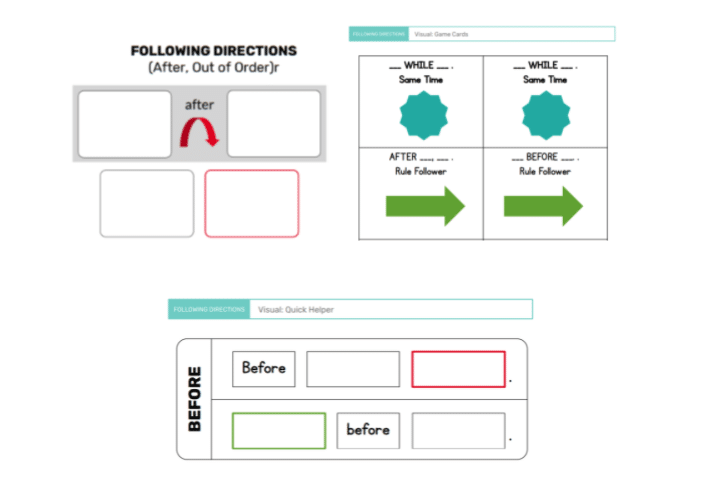
For example, with following directions, I would determine which level they're at. For these quick probes, I try and grab five to 10. I use my clinical judgment to determine what is actually helpful, but I really like getting that probe data, because I want my students to demonstrate what they can do on their own. I want to know what they've retained and how they're coming into the session.
If I do a quick probe on following directions, and the student is at 0% accuracy, and I want to work on that skill during the session, I know that I need to do some teaching, because we are not going to get into embedded practice right away, because they have no clue what's going on with the directions. Typically if they're under 60%, I like to do some teaching. Even if they're higher at 80, I would just have them tell me and have them teach me to get some of that reciprocal teaching in. So, that's what I do there.
So, that's how I start the session. We rotate through all of the students get a quick probe. It just takes a couple minutes. It's all super organized because it's something we do every single time. And we don't do the same goal every time. I just do one goal per student. Sometimes I split the goal into separate assessments if it's a loftier goal, but I just pick something that can be probed in 30 to 60 seconds, just super simple. But that data is huge when it comes to setting up the session, because like I said, if the session will look a lot different if the student is at 0% versus 80 or 100%. And so that's what I like to do first.
I have my session plan ready to go, but then based on how the students perform, I decide where we're going to start. If Johnny's at 0% accuracy with following directions, that's what we do, a quick teaching activity there. And then Lacy's doing really well with her past tense verb goal. So as we're working on following directions, doing that teaching, doing that structured practice, Lacy's going to practice her past tense verbs.
So I'll give Johnny a direction, he'll act it out. And then Lacy will use the past tense verbs. She'll tell me what he did. During that teaching activity, the other students have the opportunity to serve as peer models, but I can still be strategic and give them opportunities to work on their skills as well. So, that's how that works.
Then we might do the teaching, wherever we are in the unit. We spend the rest of the session. And after I collect that probe data, I love taking the data on my phone. So we just open up the app, tap the accuracy. It automatically calculates it for me. I hit save, put that data away. And then I just focus on being really present with the students. So, this rubric is something that I like to use. It's called the level of support rubric. It includes the structural and interactive scaffolds, as well as additional types of support that we can use to support our students.
So I just focus on being present and giving the students as many supports as they need to achieve about 80% accuracy. That's always my goal. I want to be in that sweet spot of support and knowing how the student did on their own really helps set me up. So if they were at 40%, I get a rough idea. "Oh, I probably need this little bit of support." It's harder to describe.
Maybe I just need a visual cue, and then that's all they need to get to 80%. But if a student is at 0%, I'm going to start with that explicit teaching. I'm going to provide visual, verbal, tactile, gestural, all the types of supports that they need to be successful. If I start teaching something and I feel like they're getting it 60% of the time, I need to find another support to increase that accuracy, just so that they're learning it appropriately so they're not getting frustrated and so they're still hanging in there. So that's how I set that up.
I've gotten really good at remembering the types of support that I provide. So at the end of the session, I just type in the rough estimate of the accuracy. I'm not taking tallies during all of this. I'm not too worried about that. I just want to see how students really just focus on providing the best possible support. And then at the end of the session, I just describe the types of support that I provided. And that is really helpful for me clinically, because then I can figure out which supports are the most helpful.
And if someone were to inherit my students and see the notes, they would know exactly where the student was, because they'd see the probes. They know their accuracy, and they'd know what that meant. And then if I do a good job describing that, then it'd be incredibly easy for someone just to step in and know what to do with the student. So, that's what we've got.

Scroll back to top

Sign up to receive email updates

Enter your name and email address below and I'll send you periodic updates about the podcast.
powered by


Filed Under: Podcast

#065: Scaffolding Bootcamp – Interactive Scaffolds

October 22, 2020 by Marisha Leave a Comment

Listen on Apple Podcasts Listen on Spotify

Want to hear more about this topic? Click here for all things scaffolding!

This Week’s Episode: Interactive Scaffolds

In the first two parts of this month’s learning series, we talked about setting the stage for scaffolding, and structural scaffold.

Now we are jumping into interactive scaffolds!

Remember: structural scaffolding is what we plan ahead of time, and interactive scaffolding is the in-the-moment reacting that takes place during the therapy session.

In this episode I break down the three sub-types of interactive scaffolding, which are intended to facilitate students’ responses, maintain engagement, and encourage concept accuracy.

Sounds like an SLP’s dream. 🥰

Now, we didn’t have time to dive into all the different strategies for each specific skill, but you’ll definitely walk away with an introduction to the basics — then you can go down your own research rabbithole about all things scaffolding!

Links Mentioned

– ReadWorks Article: Conquering Phobias
– SLP Now Membership (Graphic Organizer included in membership)
– Literacy-Based Therapy Cheat Sheet


Subscribe & Review in iTunes

Are you subscribed to the podcast? If you’re not, subscribe today to get the latest episodes sent directly to you! Click here to make your listening experience auto-magic and as easy as possible.

Bonus points if you leave us a review over on iTunes → Those reviews help other SLPs find the podcast, and I love reading your feedback! Just click here to review, select “Ratings and Reviews,” “Write a Review,” and let me know what your favorite part of the podcast is.

Thanks so much!

Transcript

Transcript
Email Download New Tab

Okay, so now onto interactive scaffolds. These are reactive. So interactive, reactive. The structural scaffolds are things that we plan ahead of time. Then, the interactive ones are things that we do in the moment. It's when we respond to what's happening in the session. The cool thing is, if we have the structural scaffolds in place, we'll have a lot more cognitive capacity. Especially as a newer SLP, we'll have a lot more resources available to us to be reactive and provide those scaffolds in the moment because we won't have to be worrying about the general structure. That'll already be taken care of. We can really focus on the students and providing them with what they need.
Now, we'll dive into the three types. The first one is a response, interactive scaffold. This is intended to facilitate students' responses. The cool thing is that we automatically end up doing a lot of these things. After I started grad school, I found myself using a lot of these scaffolds with my students, and just even with strangers. With response facilitation, we want to encourage our students to provide a response as we work towards their goals. Then, we can be aware of the different response facilitation.
Here are some things that we can do. If we're working on producing past tense verbs in sentences, or if we're summarizing a passage, we can use some of these different response facilitation. We can give a model. If we're working on producing past tense verbs, we model, model, model, model those past tense verbs, or we can provide part of the answer. If we're doing those past tense verbs, again, we can say, "The student err..." just to give them... That may or may not be helpful, but for some students that might work, or if we're creating a summary, I might give them visual choices, which gives them part of the answer, or I might give them one of the answers, and they have to find the other ones.
We can ask leading questions. If we're trying to fill in the summarizing organizer, and if it's a passage about... What did we have for this month? Conquering phobias. If one of the statements on the organizer is, "Rats are scary." One of the leading questions we can ask is, "Is that relevant?" or "Does that have to do with the main idea?" That's just one example of something we could do.
We could point to a visual. We could point to the organizer, and we can point to the visual. That breaks down the skill if they're stuck on a certain step. Then, we can also repeat and emphasize key points to lead the child to write the answer. So lots of options there.
Like I said, I think these are all things that we automatically do, but I think it's a helpful refresher, too, if we are feeling stuck. We know how to do all of these things. It's just a matter of being like, "Okay, I'm stuck. I'm going to try some of these things."
The next type is regulatory. These are intended to maintain student engagement. If a student is not engaged, they will not be learning, and they won't be making progress towards their goals. Some things that we can do are that we can review their goals. We can talk about just what they are and why they matter. That makes a huge difference. I used to struggle to keep students motivated. I mean, I can keep any kid motivated with a game, for the most part, but I had a lot more success once I started really talking about their goals and targeting their goals in meaningful contexts. It's really cool to see how students step up when given that context.
Some other things we can do are really content to pass knowledge. This is something that we do a lot of in step one of the literacy-based therapy framework, but we can also do that if we're starting to lose them. We can reel them in and talk about how it's related to something going on for them now. We can comment on student performance and giving specific feedback. It can be incredibly helpful. Then, just providing redirection. If they're looking off or if they're starting to fall asleep, we could just redirect that behavior.
This is a really great opportunity to incorporate some growth mindset. I've seen that work really well for my students, too, especially because a lot of our students really struggle in the classroom, especially in the older grades. School's not easy for them because of their speech and language delays. They have to work extra, extra hard to be able to even just keep up. I think praising their effort is incredibly meaningful because that'll... I've seen some students with really great growth mindset. It's just amazing to see what they can accomplish. If we can share that with our students, that is just super amazing.
The last type of interactive scaffolding is linguistic. This is intended to encourage concept accuracy. The goal of this is to help our students nail down the concept accurately. Once they provide a response, we can support their learning by providing a model. That would be more ahead of time. If we see them struggling, we can give them that model. We can do expansions and recasts, where we add to what the student is saying. So if the student says, "He run," we could say, "He is running." We would add the "is" and the I-N-G at the end.
We can do focused contrast, where we demonstrate the error and the correct target side-by-side. So if we're doing grammar, we can say, "Oh, I heard he run. Is it he run, or he is running?" That can be a focused contrast. We can also do that with the summarizing examples. I'll show you what the graphic organizer looks like in the later unit. But we can look at it and put one answer on the organizer, and then switch it out for another one and have them look and see which one is correct and which one's not correct and have that focused contrast. Then, we can also do vertical structuring where we ask a student to provide more information, and then combine the responses to reach their target. Those are just a couple of things that we can do. It's not a comprehensive list, but those are some great strategies. If we ever have someone observe, we can list those different things that we're... We can use some of those fancy vertical structuring to show what we're working on.
We don't have time to dive into all of the different strategies for the specific skills, but there's really cool research out there, especially when it comes to grammar. It talks about how to structure, when do you use certain supports, and when to pull in other ones, and just the progression there. It's been super, super cool to see that all come together, but that'll be another time.
Then, some other things that we can do, we can have peer models. That's one of the beautiful things about mixed groups. I personally love mixed groups because it gives students opportunities to demonstrate their strengths and also see other students modeling their targets. Then, another thing we can do is reciprocal teaching. It's an instructional activity in which students become the teacher. I think it came from small group reading research, but the processes where the teacher or the SLP models, and then the student... It helps the students learn how to guide the group discussion and moving along there. But I think just it boils down to giving students opportunity to teach concepts, which I know that works really well for me.

Scroll back to top

Sign up to receive email updates

Enter your name and email address below and I'll send you periodic updates about the podcast.

powered by


Filed Under: Podcast

#064: Scaffolding Bootcamp – Structural Scaffolds

October 15, 2020 by Marisha Leave a Comment

Listen on Apple Podcasts Listen on Spotify

Want to hear more about this topic? Click here for all things scaffolding!

This Week’s Episode: Structural Scaffolds

When I was in grad school, the main model of therapy that I saw in the clinic/with supervisors was drill-based. So that’s what I took to the classroom!

But what I found when I was implementing that style of therapy is that the students weren’t generalizing these skills to the classroom. 🤔

This prompted me to look into research to help me facilitate generalization for students, and that research led me to….

Scaffolding!

There are so many ways that we can set our students up for success, including establishing routines within the session. This is really important because it makes the session more predictable and familiar for students, which helps them to save their mental bandwidth for the work at hand. This is something that scaffolding helps us to do! 

In this episode I talk about structural vs interactive scaffolding, and do a deep dive into structural.

Let’s get to it!

Links Mentioned

– SLP Now – Digital Goal Card
– SLP Now Membership (WH Question Visuals are included in our membership)
– Literacy-Based Therapy Cheat Sheet

Subscribe & Review in iTunes

Are you subscribed to the podcast? If you’re not, subscribe today to get the latest episodes sent directly to you! Click here to make your listening experience auto-magic and as easy as possible.

Bonus points if you leave us a review over on iTunes → Those reviews help other SLPs find the podcast, and I love reading your feedback! Just click here to review, select “Ratings and Reviews,” “Write a Review,” and let me know what your favorite part of the podcast is.

Thanks so much!

Transcript

Transcript
Email Download New Tab

Now, officially on to the scaffolding strategies. So like I said, we have two main types. We've got structural and interactive. And there are three types of interactive scaffolds. So we've got regulatory, response and linguistic. So we are going to start off with structural scaffolds and I'll give some different examples to find them, give some examples and we'll go through the two main types and the subtypes. And then once we knock these out, then the next sections of the course, we will dive into some practical application. So if you have any questions about what this would look like, feel free to drop them in the chat and then I will be sure to answer those as we go through the demonstrations.
So first step, structural scaffolds. So these are the things that we do ahead of time to make sure that the session is meaningful and purposeful for the student. And they're key to more efficient therapy sessions that we can be confident about. So just planning ahead will help us engage the students. As soon as they walk into the room and then also prevent any last minute scrambling for materials, which I've definitely done. So it's definitely something that we can aspire to though.
So here are some things that we can do to set our students up. So we can establish routines within the sessions. So this is really important because it makes the session more predictable and familiar for our students. And then the student doesn't have to be worried about what's next. They can really just focus all of their energy, their brain energy, on the skill that we're working on. So they don't have to be... They can feel secure and solid and just give everything to the skill at hand. And so an example of a routine that we might have, I really like using goal cards with my students. So we set those up at the beginning of the school year, we talk about their goals, we talk about why they matter and we revisit that anytime we redo the IEP. So yeah, the students walk in, they grab their goal cards. That's part of the routine. They go through their goals as I'm collecting.
One thing I really like to do and I'll explain that more later, but I collect a quick probe at the beginning of the session. So the students know they grab their cards, they review their goals, remind themselves of why they matter and then as they're doing that, I go around the group and grab quick probes from each student. And that was when we were in person, but a similar structure could work when you're doing teletherapy. And so that's the routine for the beginning of the session. Then we have the routine in terms of... They know the structure of the literacy based therapy unit. So it looks a little different every session, depending on which step we're on, but they know that we have goal review probes. We do our practice and then we wrap up the session, we put away the goal cards, we'd go back to class and that's the whole routine.
Another thing that we can do is to carefully select our treatment materials. So we've talked a lot about that already. And then we can select themes that are related to what they're talking about in the classroom and just share what we're doing with the teachers as well. I've shared some of my different graphic organizers related to skills that students are targeting. I had a nice little visual for WH questions. And it's really cool because I made it for that one student and the teacher ended up making a bunch of copies and pasting it on a bunch of students' desks because apparently my student wasn't the only one who needed help with questions. But I showed her how to use it and then she was able to use it too. Sorry, that was a little bit of an aside, but I think that can be super helpful and that can be a structural scaffold for the classroom.
And then, now we get to talk about the plan and the setting of therapy. So we can look at the activities that we have planned and this can... So we can modify the order of presentation. So we can be strategic. Maybe we pick something that's really challenging and complex right at the beginning and then we save something easier for the end of the session when they might have less energy. We might strategically teach before we dive into an activity. That can be a strategic organization of the presentation. Another thing that we can do is modify the environment. So we can provide therapy in a quiet room versus in the classroom. We can provide therapy in a smaller group. We can provide visuals. Those are all different things that we can think of ahead of time. We can modify the length of the session. We can modify the frequency of the session. These are all things that we can do ahead of time to set students up for success. And then we can also enlist peers to provide support. There's some really cool research on that.

Scroll back to top

Sign up to receive email updates

Enter your name and email address below and I'll send you periodic updates about the podcast.
powered by


Filed Under: Podcast

#063: Scaffolding Bootcamp – Setting the Stage

October 8, 2020 by Marisha Leave a Comment

Listen on Apple Podcasts Listen on Spotify

Want to hear more about this topic? Click here for all things scaffolding!

This Week’s Episode: Scaffolding – Setting the Stage

I’m going to show you exactly how to leverage your greatest therapy tool (you!)– no fancy materials required– in a way that empowers your students’ independence, contextualizing their learning, and makes planning. so. so. much. easier for you!

It is all in the scaffolding! Let’s drive in, shall we?

Links discussed

– Gillam, Gillam, and Reece (2012) provided small-group intervention three times a week over 6 weeks. The intent of the research study was to evaluate narrative intervention that is contextualized (literacy based) versus decontextualized commercially available games and drill cards designed to increase vocabulary, sentence complexity, and social language. The contextualized intervention used explicit and implicit questions, vocabulary, and syntax thematically tied to literature. The results indicated that students’ comprehension and story retelling/generation skills improved more with the contextualized intervention as compared to decontextualized intervention.
– Click here for last week’s podcasts on Literacy-Based Therapy Bootcamp
– Free Caseload at a Glance sheet

Subscribe & Review in iTunes

Are you subscribed to the podcast? If you’re not, subscribe today to get the latest episodes sent directly to you! Click here to make your listening experience auto-magic and as easy as possible.

Bonus points if you leave us a review over on iTunes → Those reviews help other SLPs find the podcast, and I love reading your feedback! Just click here to review, select “Ratings and Reviews,” “Write a Review,” and let me know what your favorite part of the podcast is.

Thanks so much!

Transcript

Transcript
Email Download New Tab

When I was in grad school, the main type of therapy that I saw was drill-based. And I that's what I learned. That's how I was taught to do therapy. So when I started in the schools, that's what I did. I just used that drill-based approach that I got really good at. But I realized that my students were struggling with generalization. I went to several IEP meetings, where I was very, very excited to report this amazing progress that students made towards their goals. But before I had a chance to share, the teacher would always inevitably give her update or his update, and what I was seeing in the therapy room, wasn't matching what was happening in the classroom. Too many times. So I dug into the research to figure out a better way to structure my therapy and help my students work towards generalization.
And so I ended up landing on literacy-based therapy. I will do a very, very quick overview. But last month on the podcast, we talked all about literacy-based therapy with tons of different ideas and resources to navigate that. So definitely reference that if you want more information. And just something that was interesting that I noticed, so when I was doing that drill-based therapy, we get to pick tasks that are at the student's level.
Articulation is a really great example. So we figure out how a student is doing, and they're either in isolation, in syllables, in words, in phrases, sentences, and we can just, we can simply adjust the task. And if the student's struggling at the phrase, then we'll jump back to the word level. And so it's easy to jump back and forth there. However, when we're working in context, which is what I found, there's a lot of research to support working in context, but it's a little bit messier. There aren't as many structured tasks. And there is still some of that involved, but that's why scaffolding is so incredibly important, because we can work in context if we have appropriate strategies and scaffolds in place to set our students up for success.
So I'm really excited to dive in on all of the different scaffolds that we can use, have a good refresher, and then just to empower all of us to work in a purposeful context, in a meaningful context, throughout our therapy. And then the ultimate goal is to get students to be using these skills in the classroom, and it's just one strategy that we can use to work towards that.
And then I just wanted to share a little bit of the research behind this contextualized approach, because I know I was very skeptical when I first started. So I didn't think there was any way that I would get enough meaningful repetitions of these students' skills in context. I was worried about just being a tutor and not really teaching students meaningful skills, and also just not getting the volume that I needed. That Gillum and Reese in 2012 put together, it was a small group intervention, and they evaluated a literacy-based approach versus a decontextualized, more drill-based approach. And they found that student's comprehension in story retell/story generation skills improve more with a contextualized approach. So even if we're getting less repetitions, we're not getting a bajillion K, like initial K words, or whatever it may be. But we're targeting the skills in a really meaningful context that students can really hook onto and really make some meaningful progress towards these very functional skills that they need to participate in the classroom. So, yeah, that's what we've got there.
And that doesn't mean that, and we'll talk a little bit more about it, but there definitely is still a time and a place for that drill-based practice. There is still a time and a place for teaching skills. That's always very, very important. We will... So we'll talk a little bit about what that looks like in context. But I think this study was really helpful in getting me to wrap my head around the potential impact that trying this new approach can have.
And there are also some other nice benefits. It happens to make it very easy. So literacy-based therapy, you get to pick a book and work on a theme around that. It makes it really easy to plan. It's very, it ends up providing a predictable structure for students, and it also provides a predictable structure for us. We get really good at using a particular book or article, and we can really dive into it and provide some really amazing intervention. And that also yields a very meaningful context, which we've talked a lot about. And then it's nice because with the framework, we can start with simpler skills and then really shape them to build onto a larger goals. So we might be working on some grammatical structures, or some sentence structures, or very specific skills, but then we can shape that into using those, using that grammar, using those sentences, when retelling a story, for example. So we get to take those skills and put them into a meaningful context in a way that students would actually be using it.
So we've got some evidence to show us that this yields some nice outcomes for our students, and it's definitely not, there's still more research to be done, and we still want to use our clinical judgment. But just from personal experience, I've had a lot of success, and I've been really impressed with the research. But then again, you're the clinician, and you get to implement this in the way that you see fit. But just to recap, we've seen some studies that documented improved outcomes in expressive and receptive vocabulary narratives by using this more contextualized approach.
And Dr. Ukrainetz gives a nice five step framework that we can use to navigate this in our therapy sessions. So we'll just do a super quick overview, but like I said, check out last month's podcast episodes if you want to give a more thorough overview.
But the first step, there's pre-story knowledge activation. We help that student identify what they already know about the given topic or theme. We can ask questions. We can do a book walk. We can fill in a graphic organizer. We can do a virtual field trip. Whatever we need to fill in that student's background knowledge. The second step is shared reading where we simply read the book. The third step is post-story comprehension activities. And we'll talk about how to scaffold this, but we can just ask questions, just have them be verbal, have a discussion about the story. A lot of times our students need more support, so we can give them visual choices, or fields of choices, whatever makes the most sense.
And then for four, we have focused skill activities. This is where we spend the most time in the unit. And we specifically target the speech and language skills that we need to. And then for the fifth step, we create a parallel story. And this is, again, another opportunity for students to integrate all of the skills they targeted throughout the unit, and then we get to create a story that's similar to what we read throughout the unit.
Just a quick tip to start navigating all of this, because it can be overwhelming if I'm like throwing, "Okay. Use this therapy structure. Use these scaffolding strategies, and just go for it." How do you get set up? How do you get it organized? So that's where the Caseload at a Glance comes in. That is a very helpful way to break down your caseload. So what I like to do is I list... You can list your groups. You can list by grade. You can list by class, whatever makes the most sense for you.
In this example, we list the grades. So I could just go down and do preschool, kindergarten, first, second, third, fourth, fifth. So I would list the grades or, like I said, classroom, group, whatever you want to do. And then I go through all of my students' IEPs. So I would start, let's say Johnny is first. So Johnny is working on K, so I would put a K in the articulation box and just put one tally. And then he's also working on inaudible nouns, so I put that under grammar, add a tally. Let's say Shanique was working on K and WH questions. So I add a tally next to K, because that's what Johnny was working on too. And then she's also working on WH questions, I write WH questions, and add a tally. And then I go through all of my student's IEPs and just have a short hand of the goals. That's how I like to do it. You can adjust this however you want, and whatever will work for your brain. But for me, I really like having a shorthand of the goal.
I, typically, only do this once a year, just to get familiar with my caseload at the beginning of the year, or if I'm feeling super overwhelmed. But then I just map it out, and then when I'm done, I can see exactly which goals my students are working on. And I just make a couple copies of the Caseload at a Glance, and then I've worked through to figure out, "Okay, I need to make sure I have assessments for all of these goals." And then I go through and make sure I have them all accounted for. Then I need to make sure that I have visuals to teach all of these skills, and I go through, and then I just start highlighting them as I put together the visuals and the assessments. And that's just a really nice way. Because we won't tackle it all at once, and it's just a nice way to make progress.
So if I were starting out with a brand new caseload, I would set a goal. Whatever's realistic. Am I going to prep one visual a day? Am I just going to try and do a batch of 10 every week? Whatever it may be. But it's just a way to organize everything that we're working on and just get it out of our heads onto paper, so we can easily see what's going on.
And then you can also use it, like I said, for assessments for visuals, I really like using this for professional development too. So then if I'm deciding which conferences I want to attend, or which online courses, if I have 15 students with grammar goals, and I feel like I need some help with grammar, then I'm going to seek out some courses that will help me with that. Or if I really want to work on social language, and I know that's something that really frustrates me or that I feel like I'm not doing a great job on. So that's how I can prioritize that, and it's just a really nice way to keep track and see yourself.
So like we said, the Caseload at a Glance is a nice way to build your core materials. Really, all that you need are your assessments, your visuals, or whatever you're using to teach, and then you. You are your best therapy tool, which is why I mentioned that professional development. So if you have the evidence-based strategies that you can use, I mean, it's nice to have stuff, but if you have that, you could just run even without the assessments and the visuals. And I do think that having those organized and laid out makes our jobs a lot easier, but the you is the most important element of this whole equation. I think that's where we would want to focus our efforts, and that's where we'll get the most bang for our buck. So those are all of our core materials.
And then the next thing that we need to do is to have some kind of context for our therapy. We want to be curriculum-based, and we want to be educationally relevant. The five step framework that I talked about works really well as a context for all of these different skills. So we move through that five step framework, and we simply select a text that works well, that aligns with what they're talking about in the classroom. So a lot of times, speech therapists feel it's a challenge to get passages from the classroom. I see a lot of SLPs using theme-based units. So just something that is a little more generic, something that, especially in the younger grades, we know they're talking about in the classroom. So just the different seasonal topics.
But usually, we can also get at least a little, even just asking our students, and asking what they're learning about in social studies, for example, or in science. And we can pick or select articles like readworks.org is an amazing resource. Newsela is an amazing resource with some great passages and texts that we can use to target students, like the skills.

Scroll back to top

Sign up to receive email updates

Enter your name and email address below and I'll send you periodic updates about the podcast.
powered by


Filed Under: Podcast

#062: Literacy-Based Therapy Bootcamp – A Sample Unit for Secondary Students

September 24, 2020 by Marisha Leave a Comment

Listen on Apple Podcasts Listen on Spotify

This Week’s Episode: Literacy-Based Therapy Ideas for Secondary Students

In this week’s episode of the SLP Now podcast, Marisha shares therapy plans for secondary learners with a nonfiction article unit. Marisha breaks down her planning process and shares practical and engaging therapy activities for literacy-based therapy.

Here’s what we discussed:

[2:19] Therapy Ideas for Step 1 (Pre-Story Knowledge Activation)
[4:25] Therapy Ideas for Step 2 (Reading)
[4:45] Therapy Ideas for Step 3 (Post Story Comprehension)
[5:43] Therapy Ideas for Step 4 (Skill Practice)
[8:00] Therapy Ideas for Step 5 (Parallel Story)

Want to hear more about this topic? Click here for all things literacy-based therapy!

Links Mentioned

Add links (set to open in new tab)
– The SLP Now One-Page Literacy-Based Therapy Unit Planner
– ReadWorks Article: The Health Benefits of Apples
– EdPuzzle: Virtual Field Trip
– Summarizing Visual and Literal & Inferential Questions: Included in the SLP Now Membership
– Record a YouTube Video
– Check out this webinar for more info on teletherapy: How to Implement Digital Literacy-Based Therapy

Subscribe & Review in iTunes

Are you subscribed to the podcast? If you’re not, subscribe today to get the latest episodes sent directly to you! Click here to make your listening experience auto-magic and as easy as possible.

Bonus points if you leave us a review over on iTunes → Those reviews help other SLPs find the podcast, and I love reading your feedback! Just click here to review, select “Ratings and Reviews,” “Write a Review,” and let me know what your favorite part of the podcast is.

Thanks so much!

Transcript

Transcript
Email Download New Tab

Marisha: With my older students, I like to use a nonfiction unit and granted... So I use three types of texts with my students. So I use a picture book for early elementary. And then as the students get too old for the picture book, I'll switch to a fiction article. And then one students get a little bit older and as they get more advanced with their skills, I like to switch to a nonfiction or an expository text because that's what they're expected to learn and understand in the classroom. However, I want to make sure that they have a good foundational knowledge of story grammar because the research on narratives and story grammar is just phenomenal. It is so impressive. How big of an impact teaching students story grammar can have. And it's such an important skill in terms of being able to communicate with family and friends and tell stories, but it also makes a huge difference with comprehension in general.
So it's an amazing skill to target. But once they have good foundation knowledge and they've mastered that I like to move to expository texts, because like I said, that's what they are doing in the classroom. So this is typically what... I mean, it depends on the level of the student. I've done this with upper elementary students, but I think it's appropriate... The nonfiction texts can be appropriate through 12th grade because it targets a lot of relevant skills for that population.
So here we go. So for the first, this is going to sound very similar to the early plans, just with a couple adjustments. So instead of reading a book we're reading an article, and that article is available on... The example that we're talking about today is available on ReadWorks, which is a free site with tons and tons of amazing articles that look fabulous. And they just have a lot of high interest topics.
And then as we talked about before, with pre-story knowledge activation, this article is about the health benefits of apples. And maybe they have trouble with some of the health vocabulary, so we can talk through some of that. With older students it's also... I wouldn't necessarily pre-teach categories or basic concepts or anything like that. But with older students, I find that selecting... Especially the tier two vocabulary from the unit and pre-teaching that, is a very helpful pre-story knowledge activation activity. If they don't have a good framework around apples, if they're not familiar with them, which hopefully they are, if we're at this level. But we might do a virtual field trip to an apple orchard, just to talk about how apples grow and how they get to the store and all of that.
So those are some things that we could do for step one. And it's obviously an expository text, so we won't be able to fill out the story grammar organizer. But we might be able to fill in a summarizing visual, just talking about, so what's the main thing that we think they're going to say about apples? And what details would they tell us about that? So that's a way to modify the activity I talked about for story grammar.
And then for step two, we would go through and read the article. So we would just take a couple minutes to do that. And then another thing that we can do for... So that's step two. Then for step three, we could go through some literal questions if that's appropriate for the students. Or we can do some inferential questions, we can also dive into different levels of questioning and get into more discussion here. So we're really diving into a variety of language skills. We can talk about cause and effect. We can work on identifying the main idea and supporting details as part of the comprehension activity. And I really like using an interactive organizer for that, and it just helps. I give the students some different options, because this is a really challenging skill to tackle. So I find that giving them options, a field of choices is a good way to scaffold that skill. So that's what we would do for step three.
For step four, we would dive into focus, skill activities. So in my units, I like to break down all of the most common skills that I target with that age group. So maybe there's still some residual grammar, especially if it comes to more of the syntax types of goals, like producing more complex sentences. Or maybe there's passive voice or adverbial classes or relative clauses. Those are some types of skills we might work on. Or prefixes and suffixes and making vocabulary journals for those, like we did with the categories and object functions for the younger students. Really working on multiple meaning words. So a couple examples of activities that we can use to target multiple goals. We can do compare and contrast to work on vocabulary, but then we can also use that... It's a great, fabulous activity for syntax schools like producing compound and complex sentences.
I had a lot of students who worked... Or not a lot, but a handful of students who worked on fact versus opinion. So that was a great activity. I'd give them a sentence, they'd identify why it was a fact or an opinion. And maybe the student working on grammar would have to explain why using an appropriate sentence. And then the student... Maybe the sentences include grammar targets, so the other student has to work on defining the vocabulary or using their vocabulary words in a sentence. So there's lots of ways to integrate these skills in meaningful activities and just switch things up. And if we're just trying to get tons of meaningful opportunities for vocabulary, we've already done a ton of discussion, meaningful language activities. I'm not beyond setting up a jeopardy game or a spinner with their targets and doing it that way. But there's so many amazing activities that we can be doing for that.
And then just to wrap things up. For the later students, a parallel story, I really like recording videos. So they can pretend that they're news newscasters or all the older kids want to be YouTubers. So we can pretend that we're going to make a YouTube video to teach people about the benefits of apples. And like I said before, I have them fill in an organizer and really practice whatever they're going to say in the story or in their summary and their explanation. Before they get to do the fun activity of pulling out the camera or making an animated video. But that really helps with the engagement and it results in a really cool work sample that they can take home and share with their family. So it's super fun and really effective and engaging.

Scroll back to top

Sign up to receive email updates

Enter your name and email address below and I'll send you periodic updates about the podcast.
powered by


Filed Under: Podcast Tagged With: Literacy-Based Therapy

SLP Connect: Diversify Your Therapy Materials

September 21, 2020 by Marisha Leave a Comment

Listen on Apple Podcasts Listen on Spotify

Click here to earn ASHA CEUs for this episode.

In this week’s episode of the SLP Now podcast, Liliana (The Bilingual Speechie) shares tips to help your diversify your therapy materials.

Links

– CCBC Statistics
– Navigating and managing difficult classroom discussions 
– Why use Literary Interventions for Diverse populations?
– DiverseBooks.org
– International Children’s Digital Library
– Children’s Book Council
– Diverse Book Finder
– Liliana’s Diverse Book List
– FREE Questionnaire

Subscribe & Review in iTunes

Are you subscribed to the podcast? If you’re not, subscribe today to get the latest episodes sent directly to you! Click here to make your listening experience auto-magic and as easy as possible.

Bonus points if you leave us a review over on iTunes → Those reviews help other SLPs find the podcast, and I love reading your feedback! Just click here to review, select “Ratings and Reviews,” “Write a Review,” and let me know what your favorite part of the podcast is.

Thanks so much!

Transcript

Transcript
Email Download New Tab

Marisha: Welcome to the SLP Now Podcast. This is a very special episode, it's off of the regular schedule. But we are participating in the SLP Connect POD Conference. I'm incredibly excited to have Lilliana Vazquez with us today. And so just a little bit about Liliana, we'll definitely learn more about her through the podcast, but she is a certified, licensed bilingual speech language pathologist who currently practices in Chicago, Illinois. She has extensive experience serving bilingual populations and she works predominantly with bilingual Spanish-speaking students in general education programs, blended preschool, and low-incidence programs. So lots and lots of expertise and knowledge from Liliana.
Then before we dive into all of the juicy content, we just wanted to take a quick second to share our financial disclosures. So I am Marisha Mets and I'll be interviewing Liliana and just facilitating the discussion on how to diversify our speech therapy materials and just talking about why representation and inclusivity in the speech room matters. But I am the founder of SLP Now and I do receive compensation for the sale of those memberships. Then Liliana, do you want to give us a quick recap of your financial disclosures?

Liliana: Yes. Hi, everyone. My name is Liliana Diaz-Vasquez. I am a TPT author. I have my own website, bilingualspeachie.com, and I do get paid for my resources that I provide for SLPs and teachers.

Marisha: Awesome. Then we don't have any relevant nonfinancial disclosures to share, so we get to dive right in. So, Liliana, you've been on the podcast before, so if people want to listen back to episode 54, they can hear a little bit more about your experience working with bilingual students. But in case people haven't listened in, I'm curious if you can tell us a little bit about your experience with your bilingual populations and how you ended up there and then lead us into your experience with diversifying your speech therapy materials and just a quick recap of how you ended up being an awesome resource on this topic.

Liliana: Yes. Thank you so much once again for having me back on here. It's such a pleasure. Yeah, for those of you guys that are listening and don't know who I am, as I said, my name is Liliana Diaz-Vasquez and I am a school-based speech language pathologist. I have been working with the bilingual population for the last... I think now going on seven years as a bilingual SLP in the public school system. I was born and raised in Chicago. I'm first generation Mexican American and I speak English and Spanish fluently. Most of the students that I currently work with are predominantly Spanish speakers although I do also work with students who both speak English and Spanish and I work full-time in a predominantly Latinx community in Chicago.
Yeah. And I've been working with my students that are enrolled in blended preschool programs and our low-incidence programs. Overall, I feel like it's been quite a journey from when I first started, started this path of providing resources and just talking about bilingualism. It's always been a passion of mine since I was in school. It's a population that I knew I wanted to work with and I'm deeply invested in just all of the research and best practices for working with diverse populations. But yeah, I'm really just... How would I say? Just happy where I am right now overall. Today, just talking about diversity and diversifying our speech therapy materials is definitely a topic that sits really near to my heart.
It's a topic that I can greatly relate to growing up as a first generation Mexican American living on the south side of Chicago and attending the public school system from kindergarten to high school. I'm so glad to be sharing my experiences with you and the listeners, as well as my current self, reflections about my own personal journey through the education system. I attended an elementary school that had a large Latinx student population and I was very fortunate to have diverse teachers who were black, Latinx, white, Asian, and Arabic all throughout elementary school and high school. That factor alone, not many can say they grew up with that, so I'm very thankful for the wonderful teachers I had growing up.
But if you were to ask me to recall stories or literature or lessons where I saw my own culture reflected upon or where I saw a mirror image of my own cultural identity being Latina, being Mexican, I can't really tell you or give you an example of a book that deeply resonated with who I am because all of the stories I ever read in school were about white protagonists or characters. I think back to the stories I read in school, such as The Giver, Harry Potter, The Adventures of Huckleberry Finn, The Outsiders, these were all primarily white characters. Now, I don't think that at the time when I was younger that it bothered me much because I was simply reading what I was being assigned and I didn't question it because you couldn't of course.
I grew up with that mentality with what your teacher assigns you just have to do. But I will say now that I reflect upon the literature that I read, I definitely feel like I missed out on a lot of opportunities to learn about my own culture in the school setting and I feel like I could have learned about Mexico's rich cultural history a lot sooner. I'm very grateful for my parents because they have always taught me to be proud of who I am and they have shared and taught me all about these traditions. But if I didn't have that, then I would have never learned about who I am and where my family comes from. Not all students are fortunate to have families that are invested in embracing their own cultural practices, teachings, identities, for whatever the reason may be.
Those are the students on our caseload that we really need to think about. Now, we may ask, "Why is that? Why are students of color not learning about their own culture in school?" Well, perhaps one of the reasons is because most books don't include people of color as the main character in the story. Current statistics from the Cooperative Children's Book Center, or CCBC, at the University of Wisconsin, Madison, show that the percentages of children's books depicting main characters from diverse backgrounds are lower than the number of books with main characters who are animals. And the CCBC, they collect data on books by and about people of color, and their data shows that 11% of main characters in children's books are black or African.
1% are native American, 5% are Latinx, 8% are Asian or Asian American, 0.05% are Pacific Islander, 41% are white, and about 30% are about animals or other characters. Additionally, 3% of books have a main character with a disability and 3% have a main character who identify as LGTBQ. Now, just let those statistics sink in for a while. It's really mind boggling. If you're interested, you can view these statistics and how they attain them on their website at ccbc.education.wisc.edu. But as you can see, almost half of the books are about white characters and 30% are about animals. So what can we do to improve the situation? Well, we can definitely choose to include more diverse books in our therapy materials as SLPs and for several main reasons.
Before I explain why we need to diversify our speech therapy materials, we need to talk about why representation in books matters. So, plain and simple, representation matters because the world is so diverse. Our case loads are so diverse. So why wouldn't we demonstrate diversity in our materials as well? All children have the right to be seen in the stories we are providing to them. And in this diverse world that we live in, every child should have the right to be able to pick up a book and find themselves in the story. I want to quote the famous Rudine Sims Bishop who is a professor of education at the Ohio State University. She's also a literary scholar and has taught courses on children's literature.
She's also won several awards and has conducted research and has advocated about the representation of black people in children's literature. She wrote an article called, Mirrors, Windows, and Sliding Glass Doors, which is often cited because of its strong advocacy for the inclusion of diverse voices in literature for children. I want to just quickly read an excerpt from the article because her words are so powerful. "When children cannot find themselves reflected in the books they read or when the images they see are distorted, negative, or laughable, they learn a powerful lesson about how they are devalued in the society of which they are a part of. Our classrooms needs to be places where all children from all cultures that make up the salad bowl of American society can find their mirrors."
"Children from dominant social groups have always found their mirrors in books, but they too have suffered the lack of availability of books about others. They need the books as windows into reality, not just on imaginary worlds. They need books that will help them understand the multicultural nature of the world they live in and their place as a member of just one group as well as their connections to other humans." Now, this article is incredible because everything Rudine Sims Bishop discusses is 100% true. You can find the article online by searching the title, Mirrors, Windows, and Sliding Glass Doors. I definitely recommend reading it. Diverse books can help our students understand those who are different and help them reflect upon their own experiences.
Our students who are marginalized should be able to see themselves in the story books so they too can relate to the story. And we need to be able to allow our students to feel included in society and create positive views of themselves and positive views about what they can achieve. I would also like to point out that it is important that SLPs and teachers are not only choosing to use diverse books when they have a diverse caseload, white children or dominant groups within our schools also should be exposed to diverse books and materials. I'll give you an example at my school. I primarily work with Latinx students who most are Mexican, although some of my students are Puerto Rican or Guatemalan. But I can definitely say that Mexicans are the dominant group at the school.
Although a lot of my materials include teachings about the Mexican culture, I also like to include books and materials from other cultures as well. My students also need to learn that there are other interesting and beautiful cultures that exist besides the dominant group or besides the bubble that they are familiar with. So reading books that represent different abilities, cultures, beliefs, and skin colors help us change our attitudes towards these differences, and it can help us understand those who are different than us and their experiences. If we only read about characters that reflect our own image or reality, then we are more likely to believe that our own experience is more important or more valid than those that are unfamiliar to us.
So we need to be able to have new perspectives that reflect the reality of the communities that we live in, which leads me to my next reason why we need to diversify our therapy materials. We need to be able to reflect the reality of our communities. The reality in the school that I work at is that many of my students come from immigrant families who migrated to the United States. And several of my students have experienced the hardships of deportation of a family member or fearing that their family member will get deported or having limited access to resources because of the fear of deportation. Diverse children's books can definitely be used as a resource to help with these tough topics.
Books like these might provide hope, might help bring comfort, might help bring awareness, or just overall, it's these books that our students need, really need. This is just one mirror example, the topic of immigration. However, we can find other books that demonstrate other real struggles and challenges that exist in our communities such as books about equality, books about divorced parents, about gender identity, or books about loss. There is just so much more to our communities than just a perfect square and our students need to see that and learn about that. I'll definitely give some titles or examples of books a little later on, or books on these specific topics. But just moving on to another reason why we need to diversify our speech materials is so that we can create an environment of inclusivity.
So as I mentioned earlier on from the statistics from the CCBC, only 3% of books have a main character with a disability, or as I like to say, a difference. As SLPs, we work with a wide range of communication disorders and people who have a wide range of disabilities, so we should definitely be using materials that reflect those differences so our students can feel like they too can be the hero in a story. I'll give you an example of an inservice I did with a special education teacher at my school. The special education teacher and I wanted to do an inservice for our student body. We decided that we would focus on educating the gen ed students about autism and also tie it into AAC because most of our students with autism used communication devices.
We had the teachers bring the students into the library, since at the time we didn't have an auditorium, and we showed an episode of Arthur, called When Carl Met George. The episode is about one of Arthur's friends, named George. In the episode, George makes a new friend named Carl who was very interested in trains. Then George later finds out that Carl has Asperger's syndrome and sees the world a lot differently than most people. Just overall, it's really great episode because I really feel like the show explained autism in such an easy and understandable way for children of all ages to understand. And overall, the students at my school really enjoyed it and we were able to talk about what autism is and also discuss communication disorders that often coexist with autism.
And we had several of our students from our low-incidence program talk about their AAC devices to the students. It was definitely a therapy lesson that I remember which had the most impact on my students. They were just so eager and so excited to show off their devices and for once were really included in the lesson. And that is creating an environment of inclusivity. During the lesson, I was also able to tie in my students' goals. Most of my students were working on expressing a variety of communicated functions on their devices, and they definitely were able to do that. So SLPs can be inclusive in their lessons and still tie it in to their students' speech therapy goals. Our students need to experience a sense of belonging and feel that they are valued.
After the lesson, I definitely felt like it reduced the amount of staring from the gen ed students whenever my students would use their device in the hallway or whenever they were experiencing sensory difficulties in the hallway. It allowed the gen ed students to learn about the differences that exists amongst their peers. And teaching our students to be inclusive can also help reduce possible bullying in the schools. Think about our speech students who have communication disorders such as stuttering or delays or use communication devices, teachers in SLPs need to bring more awareness to these differences so that our students don't get bullied and so students can learn to understand one another. We have to establish the positive atmospheres or climates in our schools.
We can do that through the materials and lessons we are teaching, which brings me to my next point why we need to diversify our therapy materials. We need to create a positive learning environment. As I mentioned earlier, I work with primarily Latinx students who are the dominant group at the school. Most of my students speak Spanish. As most of you know, there is a wide range of different dialects that exist within the Spanish language. I love incorporating books where my students can learn new ways to say a word in Spanish and it really makes them accept that there are many differences amongst the languages that we speak as well. One of my colleagues just recently told me about a book called Rafi and Rosi by Lulu Delacre which uses rich Puerto Rican vocabulary throughout the book.
So this is a book that I would definitely want to use with my students. But by using a diverse therapy materials, our students can learn about different variations of languages. These variations also exist in English and perhaps we can find books that have rich vocabulary where our students can learn many ways or different ways to say a word. Aside from learning about different language variations, we can teach our students about just overall the rich history and traditions that are important to a cultural group. So definitely keep those points in mind, the points that I mentioned; strive to create a positive learning environment, and overall inclusivity, and representation.

Marisha: What an amazing overview. Thank you so much for breaking that down in terms of the benefits of using those materials. I love how you gave a couple examples of what that actually looked like in your therapy and in your settings. That was really cool and helpful.

Liliana: Thank you.

Marisha: So now that we're all on board on using more diverse therapy materials and we've got lots of rationale behind that, how would you go about... because you shared some suggestions for materials. What factors would you consider when selecting those materials? Where do you look? Where do you start? Any tips or suggestions that you're willing to share?

Liliana: Yeah. There's definitely a lot of considerations that SLPs or teachers should definitely think about prior to selecting or buying materials. So I'm going to outline some questions that you can ask yourself prior to choosing materials. These aren't in any specific order, but these are definitely questions that you should ask yourself. So the first one being, definitely ask yourself, who wrote it? Is the author of the book or the therapy material from the culture that is being depicted? Definitely know about the community you work in, really strive to educate yourself about what kind of community you are in, what does that population look like? Avoid books with negative attitudes towards a group, any books with heavy, negative bias, or books that express stereotypes.
Ask yourself, is the book accurate or is the material accurate? Are the events that are talked about, are those accurate? Does it align correctly to the historical events that you are teaching or talking about? Also make sure that the material that you are selecting is age appropriate with age appropriate vocabulary. Then lastly, I would also make sure that the vocabulary in the book aligns with the culture or the group being represented. I'll give you an example. As I said earlier, I work with a lot of students who are Mexican. Now just imagine reading a book that is talking about the Mexican culture and traditions but using vocabulary that doesn't necessarily represent that group. So just make sure that the vocabulary also in the book is accurate as well.

Marisha: Perfect. What would be a good way to find out if something is accurate? Do you have any tips in navigating that?

Liliana: Well, definitely doing, once again, a search or just studying or knowing, like I said, the community that you are working in and overall what exactly are you trying to teach or what exactly is the lesson that you are trying to cover. I would do some research prior to, like I said, buying the books or the material and just learn about, let's say, just for an example, say you're doing something on Black History Month and you just want to do research to really educate yourself prior to picking any materials so that you know what to talk about or what exactly you're going to be teaching.

Marisha: Perfect. Then I think one strategy to help narrow down the texts that we're choosing or whatever content is to look at who the author is. So I know on Amazon a lot of times it gives you a little bio of the author, or doing a Google search. That's definitely not a foolproof method, but I think if the author is from that culture, there's a much bigger, larger chance that that's going to be accurate.

Liliana: Yeah. Like I said earlier, these are definitely the questions that should be going on in your head as you are picking materials. And yeah, who wrote it is definitely important. You want the information just to be depicted accurately.

Marisha: And I know there's a lot of booklets and things out there in terms of recommendations made by people from different cultures. So that might be a good way to jumpstart that search as well.

Liliana: Yeah. Like I said, I'll definitely give some examples of some of my favorite materials that I like using as well as some... I have a list that I could talk about.

Marisha: Well, let's do it.

Liliana: Okay. There's several books that I have in my collection and I know that it's so easy to fall into the popular speech therapy books that are often talked about or used in therapy. I, myself, I'm guilty of using those books as well. And these are books like; There Was an Old Lady Who Swallowed a Fly, If You Give a Mouse a Cookie, et cetera. And don't get me wrong, those are great books that allow SLPs to target a variety of goals, but you can also do that with diverse books as well. So I'm going to give you some of my top recommendations of multicultural/diverse books that I frequently use in therapy as well as some speech therapy goal areas that you can target with these books. For those listening, don't worry about having to write these down really quickly.
I also have these recommendations on my website at bilingualspeachie.com as well as the goal areas that I'm going to mention. So I have these separated by category. So the first category that I have is multicultural books. I really, really like the book called, The Day You Begin by Jacqueline Woodson. This book is about feeling different or feeling like an outsider but accepting who you are and where you come from. It has a really great message. For this specific book, some goal areas that you can target are learning to describe the characters in the story. You can definitely do comparing and contrasting, answering questions from the story, describing emotions, understanding perspective of others, sequencing the events from the story, using helping verbs, and I'm using conjunction such as because with this book title.
So definitely one of my favorites. Another one that also falls under this category of just multicultural books is one called, We're Different, We're the Same by Bobbi Jane Kates. This one is super cute. This book features Sesame Street characters and overall how people show how we are all just different but have overall many likenesses or lots of similarities. The book just overall just demonstrates that our differences is what makes us beautiful. So once again, it really has a really great message. And goal areas for this book, you can definitely work on descriptive words, adjectives, once again discussing emotions because it has lots of pictures of people's faces.
So you definitely target emotions, labeling verbs, comparing and contrasting, building mean length of utterance through picture description because it has lots of pictures in it, answering WH-questions, like, who has the orange nose? Because once again it has a Sesame Street character. So you can really work on those WH-questions through the pictures it has or even following directions, such as, point to the girl that is running. So lots and lots of goals for that book. For the next one, it's same thing under the same category. This one's called Different and the Same by by Adijah and Atiya Brabham. Hopefully I'm saying that correctly. This book is about twin sisters who explore their individuality and celebrate their sameness.
The book also demonstrates different activities that make each one unique, and by activities, I'm talking about all sorts of verbs you could target with this one. I know in the story one girl likes painting, the other girl likes drawing. So definitely labeling verbs for this book, using adjectives once again, adverbs, definitely pronouns such as they, or she, comparing and contrasting, once again building mean length of utterance, answering questions like, who likes to sing? Who likes to paint? And using conjunctions, like, she likes to sing, and, she likes to draw. So another good book with lots of goals that you can work on for language.
The next category are books about the black culture. So these are books that I have on my shelf as well. The first one is called Black Is a Rainbow Color by Angela joy. This is a powerful book about a child who reflects on the meaning of being black and ties it to her culture and her history. It's also about normalizing the word black and just being proud overall of your identity. I love this book too to really discuss metaphors. In the back of the book, there are poems and you can definitely work on writing goals and just overall discussing just literary goals, figurative language, using adjectives once again. It has lots of great vocabulary such as words like freedom, community, culture, things that you can work on in therapy and also really great pictures, so you can work on picture description as well.
Another book that also falls under this category, it's called Mariama - Different But Just the Same by Jerónimo Cornelles. This book is about a girl from Africa that moves to a new country where she does not know the language and is unfamiliar with the culture. It's a beautiful story about identity and the process of integration and solidarity. Goals that you can work on with this book as well is sequencing the events of the story because it really is this long narrative of where this little girl started. So you can definitely work on, first she did this, then she did that. So sequencing, recalling and describing details from the story, making comparisons, and then also defining and using new vocabulary. The black has a glossary of a variety of vocabulary words that are used throughout the book. So that one's also a good one.
Hair Love is another one. This book, it's called Hair Love by Matthew A. Cherry. This book centers around the relationship between a black father and his daughter and it tells a story of how the father must do his daughter's hair for the first time. It's also about embracing and loving your natural hair. So I love this book and this one is super cute as well. The goal areas that you can work on with this one is same thing; sequencing events of the story, recalling, describing details. This book also has a glossary in the back of vocabulary words, so you can work on vocabulary. Also describing character emotions throughout the story and perspectives and answering questions as well.
Then another book too that also is under this category, Parker Looks Up by Parker Curry and Jessica Curry. This book is about a little girl who goes to a museum and comes face to face with a portrait of First Lady Michelle Obama. The little girl sees the possibility and promise and the hopes and dreams of herself in the painting of Michelle Obama. It's a super symbolic book. I highly recommend this one as well. With this one, it has lots and lots of pictures. So once again, these language areas that you can really work on, like pronouns, adjectives, perspective taking, WH-questions. It's also a really good book for that as well.
Now, moving on to a new category. These are books about the Muslim religion. This book is called Under My Hijab by Hena Khan. This book celebrates the many Muslim women and girls who wear hijabs and provides an introduction to what a hijab is. The goal areas for this one is definitely talking about clothing, labeling, describing clothing, recalling and describing details from the story, comparing and contrasting, once again those WH-questions, and sequencing as well because it's also a story that has a lot of sequential order to it. So lots of goal areas for that one as well. This one is one of my favorite, The Proudest Blue: A Story of Hijab and Family by... and I'm probably going to say this name wrong, but Ibtihaj Muhammad.
This is a very powerful book about a girl name of Faizah and her first day of school. And her older sister, Asiya, it's her first day of school. Not everyone at school wears hijabs and they don't see it as beautiful and the character in the story overall goes through these emotions of being hurt and confused and her sister helps her throughout the book and stuff. So this one also, I really, really like this book. You can definitely also cover labeling, describing clothing, those emotions, comparing and contrasting, adjectives. It's also a great, great book. Then moving onto a new category, books about divorce. I really think that these types of books are important as well. As I mentioned earlier, our communities are not a perfect square.
So books like these can be so helpful to our students and so meaningful to our students. This is one of my favorites as well. It's called Monday, Wednesday, and Every Other Weekend by Karen Stanton. This book is about dealing with the many changes that come with having divorced parents. It's about a boy who lives with his mother and father on different days of the week. Also has really great illustrations as well. So picture descriptions, a big one for this one. You can work on labeling the days of the week, recalling the details from the story. You can also use complex sentences with prepositions, because in the story, they start off a lot of the sentences with like, "On Monday, on Thursday, on Wednesday." So you could do that as well.
Then another book that's in a new category, these are books about autism, because as I had mentioned earlier, it's important to also be inclusive about the students that we are working with. This one's called, Too Sticky! Sensory Issues with Autism by Jen Milia. This book is about a child who has autism and is dealing with sensory challenges and then she ends up receiving help from her family and her teacher through accommodations and encouragement in order to participate in this sensory activity where they are making like slime. It was like slime, which is difficult for her. I like this book because you could definitely work on following directions and sequencing once again because there's a slime activity included at the end of the book and it comes with instructions on how to make slime.
So you can definitely tie it in to a hands-on activity when you're reading the story. And you can definitely work on problem solving and talk about expected behaviors versus unexpected and character perspective with this one. So that one's really great. Then books about gender. This book title is called, Pink Is for Boys by Robb Pearlman. This is a great book that helps rethink and reframe the stereotypical blue-pink gender by emphasizing that boys can like the color pink as well. This one you can also work on following directions. You can tell your student, "Point to the pink ball. Point to the the blue car." You can also work on adjectives by color and labeling verbs as well for this book as well.
Then the second one under the same category is called What Riley Wore by Elana K. Arnold. This book is about a gender creative character named Riley who loves to wear whatever clothes feels right for the day. Then at the playground within the story, the character is confronted by a kid who asks Riley if Riley is a boy or a girl. In the book, the author doesn't really assign a gender pronoun to the character, because overall, the book is about normalizing gender expressions that people have and about being confidently non-binary. So with this book, the character wears a lot of different clothing and just costumes. So you could work on labeling and describing clothing as well, adjectives because the character has different colored socks with different patterns, labeling body parts because the character puts on different hats on his head and on his body, and prepositions.
You can work on, "Glasses on Riley's face," or, "Children in the sandbox." So those are other goals that you could target. Then lastly, this category, books about the Latinx culture. The first one is called, Where Are You From? By Yamile Saied Méndez. Also these books that are in this category do come in Spanish as well in case you are looking for Spanish books. This book is about a girl that is constantly getting asked where she is from and she seeks advice from her grandfather who provides her with a very rich explanation. The story is overall about just self-acceptance and cultural identity. Really, really great for vocabulary. There's so many rich vocabulary words in this book. Picture descriptions illustrations are really beautiful as well, and answering WH-questions from the story.
Then I'll give maybe one more just because of time. This one, let's see. There's another book under this category called Alma and How She Got Her Name by Juana Martinez-Neal. This book is about a little girl named Alma Sofia Esperanza José Pura Candela who believes she has too many names, but throughout the book, she learns that the history that she carries with her name is beautiful and to overall be proud of her name. In this one, you can work on conjunctions, like in the story, her grandmother loved books and poetry. You can work on picture descriptions, pronouns, recalling and describing details from the story as well. So, I mean, I could keep going, Marisha. There's so many books, but for time's sake, I'll end it here.

Marisha: First of all, you were so incredibly amazing. That was so helpful. I feel like given your... just how the hour has gone so far, giving the rationale, giving us some tools that we can use to make decisions and select really great materials, and then you took it one step further and just put together this amazing list for us to start with. Then the speech therapy goal areas, that is so incredibly practical and helpful. I love it. I will put the link to your blog post in the show notes so if anyone is having trouble finding that link. It is absolutely amazing. It's pretty much an outline of all of the tips Liliana gave today and then it gives all of the links to the books and the goal areas. It's a phenomenal resource. I'm so excited.

Liliana: Yeah. I mean, these are really great books that I really think every SLP should have in their library of books. Just one thing I want to mention. Topics like race, culture, gender, can often come up as we are working with our students and especially if you're going to be using diverse materials. As I mentioned before, it's really important to create exposure to these conversations for our students in order to guide their learning towards being really loving and caring human beings. I know at times these conversations will come up and I just wanted to provide an outline of what are some considerations that SLP should just keep in mind when reading these books to their students.
Far and foremost, definitely listen... as you're reading these stories, listen respectfully and consider your student's point of view as you're talking about these books. Keep in mind that students can sometimes indirectly give us insight as to what is going on at home or in their life. Respect their opinions. Ask yourself, why does your student feel the way he or she does? Try to provide guidance as needed. And if your student is experiencing something that should be addressed immediately, then reach out to the correct professional such as a social worker, admin, or whoever you may need. Also don't make assumptions and take the time to educate yourself or learn more about your students' cultural beliefs and practices before you assume a certain book or speech materials appropriate.
Whether you are working in student groups or not, don't expect any individual to speak on behalf of their gender, ethnic group, class, status, or the groups that we perceive them to be a part of. The student may not feel comfortable doing so, or more importantly, we cannot allow ourselves to assume that he or she is part of a certain group. So it's kind of going back to doing your research, educating yourself about the community that you are working with or the students that you are working with. Overall, if you want to establish rapport, which is key to really getting to know your students and their families, then I suggest that you do that from the very beginning of the school year. I know now we're in that back-to-school season.
I created a letter in Spanish and English that SLPs can send home to their students' families. It's like a questionnaire that respectfully you can provide to families so that they can provide you with information about the students and their family. So that's something too that you can do ahead of time to really do that research and just educate yourself about the students that you're working with. That ties in with establishing communication ahead of time and really just getting to know your students. So as I mentioned, sending home a get to know you activity where the student and family can complete is something I recommend. Communicate with parents ahead of time and just overall plan ahead.
Plan a framework, discussion questions, and overall, lead with your goals. I would say that foremost, it's important that we are also tying these conversations to our students' speech and language goals and leading with our goals because ultimately we are also trying to help our students express their ideas and point of view. So leading with your students' goals can help ensure that you are on topic and that you are guiding the conversation in a way that will be meaningful and useful to the student. But if an SLP is looking for... just SLPs listening for more tips on just managing these conversations in the speech therapy room, I highly recommend checking out Indiana University's website.
They have a page called Managing Classroom Discussions and they provide really great tips on preparing for these conversations. So I could send you the link, Marisha, so that you could share with the listeners. Then also, the actual leader also has a great article by Phuong Palafox, who is also bilingual SLP. She discusses why literary interventions for diverse populations are important. The article is called, Why Use Literary Interventions for Diverse Populations? She also discusses some great tips on how you can support your diverse populations by building rapport as well in case SLPs are interested in just learning more. But yeah, these are great books. I really recommend looking into them.
Also keep in mind you could find free books online as well. So some resources that I really recommend looking into; there is a website called diversebooks.org. It's a nonprofit organization that advocates for diversity in children's literature. They have such great resources and just tons of websites on there just linked in on where you can find books like these online. Since I know a lot of us are doing remote learning, so you can find these books online for sure. Another website that I frequently use is called International Children's Digital Library. That one has so many books in different languages. They have... I don't even know, like over 50, 60 different languages. And all of these books, you can just search by the language that you are looking for as well.
Then there's also Children's Book Council. So that is cbcdiversity.com. Also has really great book recommendations. Lastly, Diverse BookFinder. So that one is pretty cool. It's called diversebookfinder.org/books. You can just type in exactly what you are looking for in the search engine on this website and it will populate a list of books that you can use in therapy. So I love these websites. I would definitely bookmark them. If the listeners are listening in, bookmark them in your computer, they're really great references.

Marisha: That is so incredibly helpful and I will definitely find a way to share all of these amazing links, because I just started pulling them up and they are so incredibly helpful and definitely tools that I'll be using. So thank you for sharing.

Liliana: No problem.

Marisha: Then, was there anything else that you were hoping to share or any huge takeaways?

Liliana: Just the huge takeaway is like as I said. I think the points that I mentioned earlier on why we need to diversify our materials is so key. As I mentioned, we need to be able to create these positive learning environments for our students, we need to be inclusive, and we need to start really providing that representation in the speech therapy room. As I gave those examples, as I said, the popular speech therapy books, we all use them, they're great, but you could do so much more for our students by covering these type of materials, as the books I mentioned, in your speech therapy room. You'll be surprised at the different conversations that you can have with your students and just so many things that you can learn about your students to really establish that rapport, that trust.
I've done it before with my students and I absolutely love having these conversations with them. As I mentioned before, I wish I had that when I was younger, growing up in the school setting. I wish I could have read a book about Mexican American, Latina, but unfortunately I didn't. I really wish I had and now I want to do that in my therapy room with my students so that they can really, really relate to the stories that we're providing to them.

Marisha: Yeah, absolutely. The cool thing is that it benefits all students, because learning about different cultures and just all the different topics we talked about, that's going to help all of our students just increase their awareness of everything that's out there, which is really cool.

Liliana: Yeah. Like I said earlier, you shouldn't just provide or use diverse books with diverse populations. Everyone benefits from these. So I hope whoever's listening out there, take that into mind, consideration, and just start thinking more about the way you're providing services and really make it meaningful for our students.

Marisha: Yeah. The cool thing is too, we might be thinking like, "Oh man, I already have a full library of books. I don't have money or a budget to purchase new once." I haven't checked your book lists, but a lot of books are available on YouTube or through the library. So there's so many way... You don't need money, you don't need anything fancy, you can make this happen without a huge investment. And just do what you normally do with books, but just add new ones to the list.

Liliana: YouTube and Epic, the Epic app, you'll be surprised as to what book titles you can find on on Epic and on YouTube, like the full story, the full version. So definitely take advantage of those resources.

Marisha: Yeah. It's amazing. It makes it so much more accessible. You don't have to spend hundreds of dollars building a library because a lot of them are available for free, which is amazing.

Liliana: Exactly.

Marisha: Okay. Well, I think that brings us to the end of this amazing conversation. Thank you so much for sharing all of your knowledge and expertise with us. Then just to wrap up, do you want to let people know where they can find out more about you and what you do?

Liliana: Yeah. So as I mentioned earlier, you could find the list of books that I mentioned on bilingualspeechie.com as well as the goal areas that I talked about and some of the important points that I talked about today as well. Otherwise, you can always find me on Instagram, bilingualspeechie, and also on Teachers Pay Teachers as well if you're looking for known resources in Spanish and English as well.

Marisha: Awesome. Thank you so much and I will see you next time.

Liliana: Thank you.

Scroll back to top

Sign up to receive email updates

Enter your name and email address below and I'll send you periodic updates about the podcast.
powered by


Filed Under: Podcast

#061: Literacy-Based Therapy Bootcamp – A Sample Unit for Elementary Students

September 17, 2020 by Marisha Leave a Comment

Listen on Apple Podcasts Listen on Spotify

Want to hear more about this topic? Click here for all things literacy-based therapy!

This Week’s Episode: Literacy-Based Therapy Ideas for Elementary Learners

In this week’s episode of the SLP Now podcast, Marisha shares therapy plans for elementary learners.  Marisha breaks down her planning process and shares practical and engaging therapy activities for literacy-based therapy.

Here’s what we discussed:

[0:45] Therapy Ideas for Step 1 (Pre-Story Knowledge Activation)
[2:44] Therapy Ideas for Step 2 (Reading)
[3:00] Therapy Ideas for Step 3 (Post Story Comprehension)
[3:58] Therapy Ideas for Step 4 (Skill Practice)
[8:15] Therapy Ideas for Step 5 (Parallel Story)

Links Mentioned:

– EdPuzzle: Virtual Field Trip
– Story Grammar Organizer & Literal and Inferential Questions: Included in the SLP Now Membership
– Boom Cards
– SLP Now Smart Decks Included in the SLP Now Membership
– Check out this webinar for more info on teletherapy: How to Implement Digital Literacy-Based Therapy

Subscribe & Review in iTunes

Are you subscribed to the podcast? If you’re not, subscribe today to get the latest episodes sent directly to you! Click here to make your listening experience auto-magic and as easy as possible.

Bonus points if you leave us a review over on iTunes → Those reviews help other SLPs find the podcast, and I love reading your feedback! Just click here to review, select “Ratings and Reviews,” “Write a Review,” and let me know what your favorite part of the podcast is.

Thanks so much!

Transcript

Transcript
Email Download New Tab

Marisha: For our early unit, the example that we're talking about is using Apple Trouble. Let's talk about some of the different activities we could use across the framework. So the first step is pre-story knowledge activation, and some things that we can do are to just take a virtual field trip of a forest if the students aren't familiar with that.
So one thing that I found while I was looking for some activities, I went on Edpuzzle, and I found a video where it shows like live, well, not live, but it shows video footage of real animals that live in a forest. So I thought that could be a really great place to start. Another activity that I really like to do, I mentioned this before, is story grammar. So I have an interactive story grammar that I created for the SLP Now membership, so it has the organizer, and it has interactive pieces that we can use when we actually get to the interactive story component, but there's interactive pieces.
But what I would do is just duplicate the organizer and then just clear off the icons because we don't need those. And then I would just have the students look at the book and fill, we might take pictures of the book, or we can just write in who we think the character is, and where we think the story happens. And so we would just fill in that organizer, whether I have a laminated version that I'll use and just use dry erase marker if we're doing this in person. Or if we're doing teletherapy, I'll just use the digital template and then go from there.
And then for shared reading, I just read the book. And then with that, I would just, I found the book on Edpuzzle again, and I just went through, I would watch it first to make sure it's appropriate. And then I would just run through that with my students.
Then for post story comprehension, some things that I might do, in my units I have a list of literal and inferential questions so I can pull those. Or if the student needs more support, I have a page of questions with three visual choices, which is really great for the students who really struggle with questions and need much more support. And then if students are kind of in the middle, I might still use the list of questions and just present them verbally, but use other supports, like finding the evidence in the book or whatever that might be.
So that is step three. And then for focus skill activities, this really depends on where the student, what schools the students are working on. But like I mentioned, in the second section of the presentation, we can use a lot of general activities to target students skills. So some things that we might do, if we're working on vocabulary goals, I mentioned the vocabulary journal. So a lot of my younger students are working on categories and object functions and I created some vocabulary pages where we'll go through and we'll come up with like a child friendly definition, if we're working on categories, we'll come up with a child friendly definition. It includes an activity where they identify exemplars or non exemplars of the category and they can go ahead and cross out the ones that are not examples and they can circle the ones that are or whatever floats their boat. And then we can build on that category by adding screenshots from the book that we read or drawing pictures or just writing in examples.
So if we're working on animals and we read Apple Trouble, there's definitely a hedgehog in the story and we can list out the other animals and add it to their category page.
And the cool thing is, this page belongs to the student so if we're doing this virtually, I would create a Google slide document that includes all of their vocabulary pages. And I can go through, if we read Apple Trouble this month, we can add all of the animals in that book, and then if next month we read The Mitten, for example, then we can add in all of those animals. And it's something that we continue to revisit. We continue to revisit the pages and everything, all the things that we worked on. The same goes for object functions.
And then while we're doing these activities, so yeah, it's perfect for the student who has the category goal, but it's still language rich. So if we're working on grammar, we can have the student who's working on grammar create sentences about the animals or non-animals on the vocabulary page. And that will benefit the student who's working on that grammar goal, but it also benefits the student who's working on the category goal because they get more meaningful exposure to that concept and those skills.
So that's one example of what we can do as a focus skill activity. Some other things that we can do, I created boom cards to give more structured practice for a variety of skills like vocabulary, grammar, vocabulary. So that's an option. If we want to do more structured practice with any type of target, whether it's grammar or vocabulary, they have some fun games online. We can create a Jeopardy game and maybe we have different questions on there and then the students are challenged to use their vocabulary targets and their grammar targets. I like doing describing games and things like that. So using simple things, like we might use the vocabulary cards and we'll roll a dice and the student who's working on grammar has to tell me three sentences about the squirrel. And the student working on categories has to tell, if they roll a four, they have to tell me the names of four animals or whatever it may be.
So we can do different types of activities and just be strategic in how we set them up to target a variety of goals. And then with the parallel story, again I would open up the graphic organizer and have students fill that in. And I like to create the graphic organizer in Google slides. So we would just create different pages, type in the text. And we could take screenshots from the story, we could find Google images, we can take our own photos, whatever it may be. We can set that up. And I do have a separate video that shows kind of a walkthrough of how to set up your own slides to make that happen.
So if you're interested in that you can reach out to us at [email protected], and we can kind of share that tutorial. Okay. So, that wraps up the early plans.

Scroll back to top

Sign up to receive email updates

Enter your name and email address below and I'll send you periodic updates about the podcast.
powered by


Filed Under: Podcast Tagged With: Literacy-Based Therapy

#060: Literacy-Based Therapy Bootcamp – A Framework

September 10, 2020 by Marisha Leave a Comment

Listen on Apple Podcasts Listen on Spotify

In this week’s episode of the SLP Now podcast, I break down a five-step framework for literacy-based therapy!

This framework is very dynamic and can be used in a variety of ways. Almost any language objective can be taught within literacy-based language intervention!

But first we have to pick a book or a text.  I try to select something that can be read in 10 minutes or less.   I also want to make sure that the text has met multiple demonstrations of the targets or that I can manipulate the book in a way that gives me the ability to create multiple opportunities for the student to practice. So that’s what we consider when we’re selecting a text for therapy.

Go ahead, pick a story or text you would like to use. I’ll wait!

Ok, now that you’ve got your literacy material selected, let’s dive into the framework!

Here’s what we discussed:

[5:30] Therapy Ideas for Step 1 (Pre-Story Knowledge Activation)
[10:15] Therapy Ideas for Step 2 (Reading)
[11:58] Therapy Ideas for Step 3 (Post Story Comprehension)
[15:04] Therapy Ideas for Step 4 (Skill Practice)
[20:18] Therapy Ideas for Step 5 (Parallel Story)

Links Mentioned

-Want to hear more about this topic? Click here for all things literacy-based therapy!
– Want to give literacy-based therapy a shot? Join our Literacy-Based Therapy Challenge today!
– SLP Now Membership: WH Questions, and Story Grammar Organizers are included in the membership
– YouTube or EdPuzzle for virtual field trips
– Apple Trouble by Ragnhild Scamell

Subscribe & Review in iTunes

Are you subscribed to the podcast? If you’re not, subscribe today to get the latest episodes sent directly to you! Click here to make your listening experience auto-magic and as easy as possible.

Bonus points if you leave us a review over on iTunes → Those reviews help other SLPs find the podcast, and I love reading your feedback! Just click here to review, select “Ratings and Reviews,” “Write a Review,” and let me know what your favorite part of the podcast is.

Thanks so much!

Transcript

Transcript
Email Download New Tab

Marisha: Now we're onto the framework for literacy-based therapy. We talked about some of the research behind it and why we might want to use this approach, so now I'm going to break down the five-step framework that Gillam and Ukrainetz share about in their book.
So the five steps are pre-story knowledge activation, then shared reading, post-story comprehension, focus skill activities, and then a parallel story. We'll dive into each of these steps in more detail and just a couple notes that I took away from the chapter where Gillam and Ukrainetz break this down.
So storybooks, language skill targets, and focused activities vary within the framework. So we can use this framework with different books or texts, we can use this framework with a variety of language targets, and we can use a variety of activities to target these skills, so it's very dynamic. We get to mix and match different elements, as you'll see in the demonstration portion. And then they also have a note that almost any language objective can be taught within literacy-based language intervention. So we'll share some different ideas in the demonstration, but if you have any specific goals that you're wondering about, definitely let me know and we'll do some active brainstorming as we go through.
But first we have to pick a book or a text. So I try to select something that can be read in 10 minutes or less. I find that if the text is much longer than that, it's just not... We don't have enough time, especially within how much we want to target, how many skills we want to target, and then also just within how the sessions are set up. That seems to be the sweet spot. I even tend to prefer something that's even shorter than that. I usually end up doing five-minute books and passages. And then I also want to make sure that the text has met multiple demonstrations of the targets or that I can manipulate the book in a way that gives me the ability to create multiple opportunities for the student to practice. So that's what we consider when we're selecting a text for therapy.
One other note that I wanted to share, so one common hurdle is I don't have the funds to purchase a bunch of books or I'm doing teletherapy, and I don't know... I can't use a book in teletherapy, so we have lots of options available us that are free, so lots of books are available on YouTube. And if you're hesitant to use YouTube videos because of the ads and things like that, Edpuzzle is a great site. I think it's free for everyone. You can search the link with YouTube so you can access a bunch of YouTube videos, but they don't have ads and you can edit them and adjust them however you see fit. So it's Edpuzzle, and that's a really great resource. Epic is another site that offers free digital books. And then the library, whether you get a physical book or a digital book. I was able to log into my library and I have access to tons of digital books. So those are all great ways to access books without having to splurge or spend money and they're really easy to access. They don't take a lot of time. And then for another site that I really like for articles is called ReadWorks, and I'll give an example of how I use that in the last section of this presentation.
Okay, perfect, so we will start diving into the different steps. And then just one note that I wanted to share before we dive in, these are not fluff. These are very meaningful activities and each step has a purpose. If it's not clear as we go through just a quick overview of these steps, I hope that in the demonstrations you'll see how strategic we are with how we target the skills throughout the framework. These activities are very language rich, we can target a variety of goals and put this into action with our students. So that's what we've got there, and now let's dive in.
So for step one, we have pre-story knowledge activation. Some activities that I like to do in this step, first, I like to do a book walk. These are in no particular order, I adjust the order using my clinical judgment based on what I think makes sense for the students. Maybe I'll start a book walk and realize the students have no prior knowledge on this topic, let's reel it in, back up, and start by building some pre-story knowledge so that they can complete that activity. But yeah, so the first thing that I do is... Or not the first thing, but one thing that I like to do is a book walk where, if we have a physical book, we'll hold it up, we'll look at the cover, we'll look at the back, we'll flip through some of the pages and just talk about what we notice.
One thing that I really like to pair the book walk with is a graphic organizer where we look at the cover in the back and maybe a couple pages, and we fill in a story grammar organizer and we start thinking about, "Okay, who's the story about? Where does it take place? What's the problem? What's the potential problem? How would the character feel?" We just work through the story grammar framework just to start having students think about the story and put together some ideas. And if we really struggle with that, like I said, it might be worth doing some other pre-story knowledge activation, whether it's taking a virtual field trip. YouTube/Edpuzzle is a great resource to find virtual field trips, so we'll give an example of what that looks like in the early unit. But we'll be talking about Apple Trouble, which is a book that happens in the forest, and if our students have no context of what a forest is like, or what kinds of animals live in the forest, or the qualities of those animals... I found a YouTube video that walks through some different forest animals, and in that video, we get to see some of the forest so that helps us build some of that background knowledge. And then we might do a semantic map or additional activities here to set students up for success for the rest of the unit.
The strategies that I might use throughout these activities are linguistic facilitation, so just making the student's language more complex. This can apply to grammar, or vocabulary, or just providing expansions and really meaningful language input. Another strategy that's especially helpful for grammar is focused stimulation where we provide frequent models and recast. So when we model, we highlight features naturally in conversation, or when we recast, we correct what the child says or modify the modality. This is especially important because when we look at the grammar research, before we have students start to produce different skills, they need to have a number of meaningful exposures to that target. By doing this, especially if I find if we're doing that recasting, at first, the student, they're like, "What are you talking about?" And they just continue making the grammar error. But over time, it's really amazing to see, especially over the course of just one unit, they just take it in. They don't really respond to the recast, but then over time they start correcting their utterances after we provide the recast and by the time we get to the fourth step of the unit, they are totally prepared to start producing that target on their own in different types of activities. It just makes the teaching so much easier.
I've seen that work really well with grammar, but the same thing applies with vocabulary for providing those linguistics facilitations and helping with word finding or whatever it may be. It's amazing how we're setting up students for success with this activity.
And then for step number two, we have shared reading. So this is where we read the book. I don't spend a ton of time on this step. It's probably the quickest section of the book or of the unit, we just read through it. I make sure I'll stop occasionally to make sure that students are engaged and I might point out a couple things, but it's just giving the student the context of the story, making sure they're engaged. We're not doing a ton of structured practice because we're going to be doing that throughout the entire unit. So just a couple minutes here.
And then people always ask how long I spend in each step. So with pre-story knowledge activation, it really depends if the students have a lot of prior knowledge and they do a great job filling in the organizer and they're good to go, then that can take 10, 15, 20 minutes. But if they're missing a lot of that prior knowledge, I've spent several sessions in that stage because it's still meaningful practice. Of course we don't want it to go on forever, there's a sweet spot, but as long as I'm feeling like we're still being therapeutic, according to the Rise framework, I'm okay spending more time because we have the luxury to do that and slow things down for our students, whereas general education teachers don't have as much wiggle room. That's what makes our services more therapeutic or not... Yeah, that's what makes us therapists and not teachers.
So then for step three, we have post-story comprehension. The time we spend here also varies. It depends on how much support the students need. It can be a very quick run through of comprehension, or it can take several sessions if we're really diving into all of these elements. So some things that we can do, we can ask literal questions or inferential questions, we can fill in a story grammar organizer, which I still consider to be story comprehension, because they're answering questions about the story.
And then the important part to remember here too, this is a language activity, so we're not just working on comprehension. If a student has vocabulary or grammar or social language goals or whatever it may be, we're still targeting those skills in the context. So if we're working on social language, they're working on waiting their turn or responding appropriately, not providing too many details, or providing enough details, or whatever their goal is around that. If there's grammar, they're producing grammatically correct sentences. If they're not ready to produce grammatically correct sentences, we are modeling and recasting. The same with vocabulary, if they can answer the question but they're not using appropriate vocabulary, or if they're not using enough descriptive words, or whatever it may be, we can provide those expansions. So that's how we're working on a lot of different skills at once.
And then some strategies we can use, we can just scaffold the level of questioning. We can provide easier questions to start and then get more complex. Another thing that I really like to do is citing evidence in the book. So if I ask a question and the student is staring blankly at me, one thing that I might do is I might pull out the book and I might turn to the page where the answer is, and I'll ask the question again. And then I might give them a field of choices or maybe I'll just show them the page of the book. Sometimes that's enough. So that's the type of strategy we can use.
I can also provide other types of scaffolded support. So sometimes I give multiple choice answers for the questions, whether I just list out the answers verbally, or I write them out, or I provide picture cues. I might vary the level of complexity, like we talked about before, like who and what questions versus when and where questions or literal questions versus inferential questions. And then again, always recasting and modeling along the way. So that's what we've got for step three.
And then for step four, we have focus skill activities. This is where we spend the bulk of our time. What we do here is we provide the student with language bridge activities to target multiple goals. So the opportunities are endless here, but some things that we might do are create a vocabulary journal or work on the student's vocabulary journal, we might fill in a story grammar organizer if we didn't do that in the comprehension section, or we might carry that over to the section where we have the students work on retelling the story, because that again, involves grammar and vocabulary and a bunch of language skills. We might do some pictography. That's a good strategy to use with the story grammar organizer, we might draw quick pictures for the different steps in the story, and then again, students can work on all of their different language goals as we're doing that, whether we're describing or creating compound sentences or using basic concepts, whatever it may be. And then we also can do different vocabulary games, and we'll give some different examples of what that looks like in the demo.
But then the strategies we want to use when we select relevant targets, we want to make sure that we're using student-friendly language, especially when we're working on vocabulary and creating definitions. And then, also just providing that scaffolded support, so visuals, field of choices, recast models, and all of the strategies that we use all day every day. I don't know about you, but I can never turn that support off so I'm using that even with my friend's kids sometimes.
So there's a great question here about taking data, so we will take just a tiny little detour. I'll take one or two minutes to answer this and then if you have more questions, I can direct you to some other resources. But how I structure my data is I take a probe at the beginning of every session, so whatever our focus skill activity is for the day, I take a quick probe for that, and that's super helpful because that helps me know exactly where the student is and that helps me prepare where we might need to start, whether I'm just providing models and recasts, if I need to teach this skill, if I need to provide a little bit of support or a lot of support. And then that also helps me make sure that I have really clean data to start.
So within the first minute or two of the session, I do a quick probe, we hop around and then, while I'm doing that, the other students are reviewing their goals. It's just super quick and we get really good at it, and I have a good system for that. Then we dive into the activity, and then I have a rubric that I like to use... Here, let's see if I... Yeah. So I have a level of support rubric that I like to use just to make sure that I'm being consistent in how I'm describing the support that I provide my students. So at the end of the session, I'll put my data collection tool away and then I'll just focus on being an amazing therapist, or at least attempting to be one, and then at the end of the session, I'll open up my notes and then I'll describe the level of support that I provided.
So when I'm working in context, I just want my student to be successful, and I usually aim for about 80% accuracy because that helps me make sure... I'm not taking data while I'm doing this. I'm just keeping track of it in my head. So it's not the most beautiful numeric data in the world, but I have that at the beginning of the session so I'm okay with having just some more narrative. But I feel like this is incredibly helpful because then I can describe the types of supports that are working for the student. I think that's so much more helpful than just a number of what they can do on their own. So having those two sources of data combined, it's like SLP nirvana because when it comes to seeing them make progress, it's perfect, and then also it's helpful with progress reports and all of that. So that's how I approach that.
Let me just make sure I got everything else here. Okay, perfect. So the next section is creating the parallel story. So this is where we integrate all of the skills that we talked about throughout the unit. So some things that we can do for younger students, I typically create a book, and they love this because they get to take it home. So when we were doing in-person therapy, we'd just fold eight and a half by 11 printer paper, get a beautiful colored piece of paper and then fold that over it and make an old school book. So that's one thing we can do. But especially with archer groups or with digital therapy, creating a book on Google Sites is very helpful. So I can do just this super, super quick demo of how we might be able to set that up.
There are two iPad apps that I've tried using for parallel story, so Notability can be nice and then also Pictello is cool because you can add the text and pictures, and then students can also record their voice over it, which is super interesting. And then for older students, or just to step up the engagement, students have also had a lot of fun creating movies. So we always fill in the graphic organizer first, so we'll revisit the graphic organizer that we created in step one, and then in step three, and then in step five, we'll make another copy and kind of clear things off and then create a story that's related to what we read during the unit but we just switch it up a little bit.
So if we read Apple Trouble, it's about a hedgehog who gets an apple stuck on his back and then they have to figure out how to get it off. So maybe we can make a story about an Arctic animal, what problem would an Arctic animal have? Or maybe we pick another forest animal or maybe we make it about one of the kids in the group. There's so many options, and the kids get really creative. It's really fun to see what they come up with.
Some of my students have created movies after we create that script and we practice telling it, we might act it out and we can just record them acting it out just using my phone camera. Tunetastic is another fun app. You can select a scene and then animated characters and you move them around, you can record the students' voices, so there's lots of opportunities there. And then all throughout these activities, we're just really giving the students meaningful opportunities to practice all of the skills that we've been teaching and working on throughout the entire year.

Scroll back to top

Sign up to receive email updates

Enter your name and email address below and I'll send you periodic updates about the podcast.
powered by


Filed Under: Podcast Tagged With: Literacy-Based Therapy

#059: Literacy-Based Therapy Bootcamp – A Review of the Research

September 3, 2020 by Marisha Leave a Comment

Listen on Apple Podcasts Listen on Spotify

Want to hear more about this topic? Click here for all things literacy-based therapy!

In this week’s episode of the SLP Now podcast, I break down the research behind literacy-based therapy!

This framework is very dynamic and can be used in a variety of ways. Almost any language objective can be taught within literacy-based language intervention!

But first let’s break down the research behind it. I hope it convinces you to give it a shot!

Here’s what we discussed:

Contextualized approach (literacy-based approach) vs Decontextualized (drill approach)

Gillam and Reese completed a small group intervention in 2012. It was three times a week, over six weeks. They were looking at a contextualized approach versus a decontextualized approach.  Both approaches were designed to increase vocabulary, sentence, complexity, social language all types of skills that we typically target. What they found was that students’ comprehension and story retell, story generation skills improved more with a contextualized approach than a decontextualized approach.

How to be Therapeutic in a Functional Context

Literacy-Based therapy provides a framework with makes it easier for us to plan our therapy and more predictable and therapeutic for our students

“Our primary goal with literature-based therapy intervention is not to teach the students to read. Our goal is to improve the many aspects of language.  We’re targeting the aspects of language that influence their ability to participate in and profit from instruction in the general education classroom.” – Gillam and Ukrainetz, in 2006

Ukrainetz’s R.I.S.E. Framework

R – Repeated opportunities
I –  Intensity
S – Systematic support
E– Explicit skill focus

Links Mentioned

-Want to hear more about this topic? Click here for all things literacy-based therapy!
– Want to give literacy-based therapy a shot? Join our Literacy-Based Therapy Challenge today!
– SLP Now Membership: Check out our Literacy-Based Therapy Units

Subscribe & Review in iTunes

Are you subscribed to the podcast? If you’re not, subscribe today to get the latest episodes sent directly to you! Click here to make your listening experience auto-magic and as easy as possible.

Bonus points if you leave us a review over on iTunes → Those reviews help other SLPs find the podcast, and I love reading your feedback! Just click here to review, select “Ratings and Reviews,” “Write a Review,” and let me know what your favorite part of the podcast is.

Thanks so much!

Transcript

Transcript
Email Download New Tab

Marisha: The first thing that we'll be talking about is just a review of the research so we can make sure that we're on the same page in terms of why we would even use this approach with our students. I know that trying something new is not always easy. And it's easy to doubt why... like why change things up? Is it going to be worth it? Is it going to be worth being a little bit uncomfortable, trying some new things? And I can totally relate. In grad school, a lot of my supervisors and in my placements, there was a lot of drill-based therapy. And I did get examples of some literacy-based therapy, but it was very different. It wasn't this contextualized approach that I later learned about in the research. And if everything that you've learned is more of that drill-based approach, it definitely makes sense that it can be hard to switch.
And I know I definitely had some doubts, like how in the world are we going to get enough meaningful exposures? Aren't a lot of these activities just fluff? Lots and lots of questions. If you have any feel free to drop them in the comments as well. Like how in the world am I going to make sure that I'm therapeutic? So my goal is to make sure that we answer all of those questions in this section so that we can dive into the framework and do all of the practical demonstrations and be all in. So we'll just start with a little bit of research. There actually is research to support using this approach. So there is several studies. This is just a small sampling of them, where they found that using a literacy-based therapy approach resulted in improved outcomes for receptive vocabulary, expressive vocabulary, narratives, just to name a few.
And I pulled out one specific study by Brandel in 2014... or Brandel in 2014 was talking about a study that Gillam and Reese completed in 2012. And they provided small group intervention three times a week, over six weeks. So most of us probably aren't seeing our students three times a week, but maybe we're seeing them one or two, which is comparable, but they were evaluating narrative interventions. And they were looking at a contextualized approach, which is literacy-based versus a decontextualized approach, which I think is what many of us learned about in grad school. So that's more of those games, drill-based approach. So literacy, contextualized literacy, decontextualize drill, that's what they were looking at. And both approaches were designed to increase vocabulary, sentence, complexity, social language all types of skills that we typically target. And they found that students' comprehension and story retell, story generation skills improved more with a contextualized approach than a decontextualized approach.
So that's just another example of the different... how that contextualized approach, it resulted in improved outcomes compared to kind of more of the traditional approach. So hopefully this is enough evidence to get us started thinking. And I definitely have lots of citations if you're wanting to learn more and dive more into the specific results, but that was enough to get me convinced. So there are also some additional benefits. So it does result in improved outcomes for our students, but it is easier for us to plan and I'll show you exactly what that looks like.
Having a structure to our therapy within the unit also makes things more predictable for our students. It also provides an extremely meaningful context for learning because we're using... especially if we use texts from the classroom or the texts that are related to the things that they're discussing in the classroom. It's just a really meaningful context, which will help with that generalization and helping our students actually use these skills in the classroom.
Because that's what got me... I was chugging along just doing my drill base therapy, playing my games, using my flashcards. And my students still made progress, but it happened, there were a handful of instances, where I sat at an IEP meeting and I was so excited to report how amazing the student was doing with progress towards their goals. And it just happened several times where with one instance, the student was working on following directions. They were rocking it in therapy. But the teacher said that the student really struggled with following directions. That was her biggest pain point. And here I was thinking that he had mastered that goal. So it's just, that was enough to make me start researching and looking into other options to really make sure that what happens in speech doesn't stay in speech. We really want to make sure that students are applying their speech and language skills that we're teaching them into the classroom.
Because otherwise, why are we doing what we're doing? And then another nice benefit is that we can use it to shape and to target larger goals. So we might start with basic vocabulary and grammar, things like that. But within the structure of the unit, if by the end of the unit, the students are creating their own story and they're using all of the vocabulary, all of the grammar skills, all of the things that we targeted in small little... like more discrete practice. And then we're really integrating it into the larger piece, which is incredibly powerful in terms of generalization and learning for the student. But it's also a lot of fun. I love how Karen pointed that out. It's so much more fun, which is absolutely true. So the ultimate goal is for us to be therapeutic in a functional context. That's what we've been talking about for the past several minutes.
And I just have a couple of quotes to drive that home. So this is from Gillam and Ukrainetz, in 2006. And I don't usually love to read slides, but I think this one is really important. "So our primary goal with literature-based therapy intervention is not to teach the students to read. So we're not literacy coaches, but our goal is to improve the many aspects of language. So we're talking about vocabulary, grammar, pragmatic language, phonological awareness, conversation, narrative skills. We're targeting the aspects of language that influence their ability to participate in and profit from instruction in the general education classroom."
So that is like we said, in the last site, that's our ultimate goal. And by using this approach, we're thinking about that right from the start. It's not something that we're thinking after the student makes a bunch of progress. We're thinking about it right from the start. And we're laying the groundwork to enable the student to generalize those skills as quickly as possible. And there's nothing worse than seeing our students... just the classroom observations. A lot of times I saw students who were very disengaged and I wasn't doing anything to help them participate in the classroom, until I started using this approach. And granted, we're not going to help them in all areas all at once, but it's really amazing to see how one... like helping with one area can really impact the student in the classroom.
So just to address one of the common concerns, like how in the world am I going to be therapeutic if I'm doing something that's this contextualized? So this is a framework that Dr. Ukrainetz shares and I use it to just check myself. So if I'm not feeling great about a session, I will go through this framework and just kind of ask myself, okay, so we've got the RISE framework, R-I-S-E. Like what did my R I S and E look like? So just to break that down a little bit. So the framework is called RISE. And R stands for repeated opportunities, I stands for intensity or intensely delivered, S stands for systematic support and E stands for explicit skill targets. So the R for repeated opportunities. That just means we want to make sure that our students have enough opportunities to practice their targets.
So if we're working on initial K for example, for articulation, if we give the student two opportunities to practice their word, that is not going to be enough. However, if we are working on some vocabulary words, like let's say, we're working on a basic concept and the student has opportunity to use that word or is hearing or saying that word 50 times in a session, that might be enough repeated opportunities. And there's not a hard and fast rule. It's really using our clinical judgment here. But if we're sometimes it's like, that session didn't feel so... it didn't feel very effective. Did I give them enough opportunities to practice their target skill? And if my gut answer is no, I might look at how to revamp the session to provide more opportunities for practice. I stands for intensity. So this is something that we decide ahead of time.
So when we're in the schools, we decide how long and how often we're going to see the student. So if we feel like they're not really making progress. One thing that we could consider is changing the intensity. So maybe it's one time a week for 30 minutes, or three times a week for 10 minutes, or maybe they need more intensity. So we're doing two times a week for 30 or three times, whatever it may be and adjusting that. Then the S stands for systematic support. And we'll give some different examples of what that might look like in the third and fourth sections of this presentation. But it's basically just making sure that we're providing scaffolding and support that the student needs to be successful. And then E stands for explicit skill targets. So we want the student to know... well, we want to know what they're working on.
And we want the student to know what they're working on. So if someone is watching our session, they should know which skill the student is working on. And some ways that I like to do this, I have goal cards for all of my students. And we review them at the beginning of every session. And then we... I'd like to do, and we're not going into a ton of detail on this, but we'll pick the primary focus for the session. I think my students really benefit from having one main skill that we're focusing on. So even if they have 10 goals, we're picking one goal to focus on in that session. And I make sure that I know what goal we're working on and that a student knows what that is. So we'll review that with a goal card. And then I typically have a visual that I use to teach the skill, but then I also pull up that visual, just so we are reminded of the skill that we're working on.
And I definitely want to fade the use of that visual over time to the point where I can just say, okay, we're working on your pronoun goal, or we're working on your complex sentence goal. And then the student knows what they're doing, but in the beginning, before they start getting towards that generalization, we really want to have those supports in place. And then Ukrainetz added a plus. So she calls it RISE plus. The plus stands for student factors. So that ties into the student goal awareness. A student is not going to be, especially as they get older, they may lose motivation to participate in therapy. So we want to make sure that they're aware of what they're working on and especially the why behind that can make a really big difference. So if they understand how being able to produce complex sentences or summarize a story, if they understand why that's important and how that relates to their goals, that can be incredibly powerful.

Scroll back to top

Sign up to receive email updates

Enter your name and email address below and I'll send you periodic updates about the podcast.

powered by


Filed Under: Podcast Tagged With: Literacy-Based Therapy

#058: Therapy Planning Bootcamp – Easy & Efficient Therapy Plans

August 27, 2020 by Marisha Leave a Comment

Listen on Apple Podcasts Listen on Spotify

Want to hear more about this topic? Click here for all things therapy planning!

In this week’s episode of the SLP Now podcast, I break down my therapy planning! Let’s start with printing out or opening our SLP Now Therapy Planner.

Topics Covered

– You already have a solid session routine, a set of core materials, and a data collection plan.
– Now we get to plug in a few more details like a 5 step literacy-based therapy framework to follow!

Here’s what we discussed:

[3:07] Therapy Ideas for Step 1 (Pre-Story Knowledge Activation)
[4:10] Therapy Ideas for Step 2 (Reading)
[5:15] Therapy Ideas for Step 3 (Post Story Comprehension)
[5:36] Therapy Ideas for Step 4 (Skill Practice)
[8:20] Therapy Ideas for Step 5 (Parallel Story)

Links Mentioned

–  For all things planning! Head to SLPNow.com/plan
– The SLP Now One-Page Literacy-Based Therapy Unit Planner

Subscribe & Review in iTunes

Are you subscribed to the podcast? If you’re not, subscribe today to get the latest episodes sent directly to you! Click here to make your listening experience auto-magic and as easy as possible.

Bonus points if you leave us a review over on iTunes → Those reviews help other SLPs find the podcast, and I love reading your feedback! Just click here to review, select “Ratings and Reviews,” “Write a Review,” and let me know what your favorite part of the podcast is.

Thanks so much!

Transcript

Transcript
Email Download New Tab

Speaker 1: What can we do to streamline our therapy planning and make sure that it's something that doesn't take over our lives and that we can achieve that awesome ideal of maybe just spending a couple of minutes a week prepping everything? So, can you do a quick recap of what we've already done? We have a general structure or routine for our sessions. We know what skills we're going to target. And then we have the materials to target those skills.
And that includes the visuals. So, just different visual supports to break down skills for students, even if they're posters that we just drew ourselves, that is totally perfect. And then we also have the data to support and show us where our students are. And we have these amazing therapy strategies just tucked away in our pocket, ready to use whenever we need them. So, all that's left to do is to figure out the when and the how.
So, the timing of the different skills, like when we're going to target following directions versus all the grammar goals and then how we're going to do it. So, what context are we going to use? And so, we'll talk about some different ways to put that together. So, I just wanted to share a quick example of what this might look like in action. So, I'm just going to open up one of my units super quickly here. So, that's just because it's... Let's see. August. So, we're going to look for the August unit. So, we'll look at if you take a mouse to school. So, in terms of what whole unit might look like.
So, I know that my students are working on following directions, all their different grammar goals and then I just need to structure it and put it all together. So, what that would look like, I make these cheat sheets because it just helps me manage my brain and put everything together. But I really like using a literacy-based therapy framework and there's some awesome courses and podcast episodes that breakdown this in much more detail. This is going to be a quick two minutes super fast overview of what that looks like.
But for the five step literacy-based therapy framework, the first thing that we do is break down the pre-story knowledge activation. So, if our students are in kindergarten, they haven't been to school, they might be missing a lot of that pre-story knowledge about being in school. So, we can talk about what we do on the first day of school, we can take a virtual field trip, we can walk around their classroom and talk about the different parts of the school.
We might look at the book and look at the cover and look at some of the pages and talk about what we think might happen and seeing where the students are and then also just providing some scaffolding and support. So, even though this may seem like a fluffy activity, we're using our clinician tools to really to set our students up for success and using those evidence-based strategies of like recasting and providing models and all of that.
So, we're still targeting all of these goals even though we don't have a specific grammar drill sitting in front of us. But arguably, this can be more effective and work better towards generalization. So, if you haven't tried it, I'd highly recommend it because it has changed my therapy. So, that's what we would do for step one. And then I typically just print out one of these organizers and this is what I use for a whole month of therapy.
And it definitely depends on the group, like this won't last as long if there's just one student in a group versus if it's a group of four students with four completely different goals, each will have a lot more to target. But I think even if it takes a longer time, I think it's still an incredibly meaningful activity. So, I would just jot down what I want to work on. So, for pre-story knowledge activation, the activities I might use are like a YouTube video, we might plan a scavenger hunt around the school, we might do a book walk and look at the book. Those are the activities.
Then shared meeting. We'd read the story and then post story comprehension. I would use the comprehension questions listed here or if you don't have this, you can come up with your own. And then, there's also different visual supports that we can use and pull if the students need those. And then for step four, we'll do some focus skill activities. So, this is the part that is a little bit overwhelming because if you have four students working on four different goals, that's a lot to manage.
And so, a couple strategies that I like to use is just break it down, list the skills that you want to target and identify the targets in the books so you know what you're looking for. Oh, something interesting. Okay. So, then, I would break down the targets so that I know what we're going to work on. And then another thing that I can do is think of... So, once I have that, I can think of different that I can use to target multiple skills at the same time.
So, some things that we can do are like if one student is working on describing, okay, awesome, let's describe some of the items in the book. But if another student is working on pronouns or past tense verbs or whatever grammatical structure, when we're describing things, we're producing sentences that include grammatical structures. So, if you're using language-rich activities, it's really easy to target a variety of skills.
Like one student might be working on describing in general and another student might be working on just naming categories, it's a sub skill of the describing. So, that's really easy to work on together or in conjunction. So, I come up with a bunch of different activities that will give us the opportunity to target those different skills. And sometimes it's a little bit of a juggling act and this is how it becomes the art.
So, we get to navigate like how much time we spend teaching versus the contextualize activities and how we move between those. But even we spend... If Johnny is just learning about categories and it's a new skill for him, we're pulling out the categories, visuals, we're doing some different activities like sorting objects or whatever it may be. That's still a useful activity for the other students in the group.
We still get to recast their grammar. We get to provide grammar or vocabulary instruction all along in the activity. And it can be a cool way for students to demonstrate their skills and show what they know. So, that's how that works. And for the last step, it's the parallel story. So, this is where the students get to create their own story and really integrate all of the skills that we've worked on. So, a lot of these steps take... Especially the focus skill activities, we can spend several sessions really breaking that down.
But the cool thing is, if you map out what you want to do across these steps, you have activities to last you like a whole month of therapy and then you just can keep track of how you're moving through the different activities and you can reuse this across multiple groups too. So, it takes me a couple of minutes to fill this out. I use it for the whole month and can you just tailor it to the group using the strategies that are in my head and some handy visuals. And that's all I need when it comes to planning. So, that's what that looks.

Scroll back to top

Sign up to receive email updates

Enter your name and email address below and I'll send you periodic updates about the podcast.
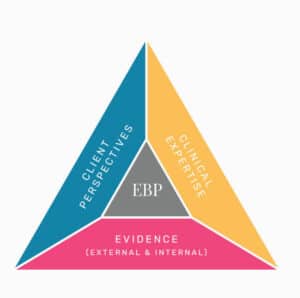
powered by


Filed Under: Podcast Tagged With: Therapy Plans

  • « Go to Previous Page
  • Page 1
  • Interim pages omitted …
  • Page 16
  • Page 17
  • Page 18
  • Page 19
  • Page 20
  • Interim pages omitted …
  • Page 38
  • Go to Next Page »

Platform

  • For SLPs
  • For Districts
  • Pricing
  • Contact

Resources

  • Success Stories
  • SLP Now Blog
  • Podcasts
  • Speech Therapy Tools
  • Reviews

Policies

    • Cookie Policy
    • Privacy Policy
    • Terms of Service
    • Trust Center


social links

youtube

Youtube

instagram

Instagram

facebook

Facebook

© 2026 | All Rights Reserved | SLP Now®