
If you’ve been implementing curriculum-based therapy, you already know the appeal. It’s contextualized, it’s relevant to what your students are actually doing in class, and it tends to hold their attention better than an isolated worksheet ever could.
You also probably know the catch: it takes real setup to make this work. Curriculum-based therapy touches a lot of moving pieces at once. Your therapy materials, your data collection, and whatever the classroom teacher hands you that week all have to work together, or your planning time disappears fast.
This post walks through what curriculum-based therapy actually is (with the research behind it), and then gets into the system: how to organize your materials, your data, and your classroom-shared resources so this approach is sustainable, not another thing adding to your plate.
What Curriculum-Based Therapy Actually Is
“Curriculum-based” gets used loosely, so it’s worth being precise. Curriculum-based language intervention means you’re targeting a student’s speech and language goals using the content, vocabulary, and materials they’re already working with in the general education classroom, instead of using isolated, unrelated materials.
This isn’t a new idea. ASHA has asked school-based SLPs to be contributors to the educational curriculum for years, and SLPs are well positioned for this role given our language and literacy expertise. It also lines up with how special education law works. IDEA calls for students to be educated in the least restrictive environment, and for many students with language needs, that means services connected to what’s happening in their actual classroom, not pulled out and disconnected from it.
In practice, this looks like:
- Using a book the class is reading to target vocabulary and narrative goals
- Pulling grammar or syntax targets from a current social studies or science unit
- Collaborating with the classroom teacher so therapy reinforces (instead of duplicates) what’s already being taught
Why the Research Supports This Approach
The push toward curriculum-based and classroom-connected therapy isn’t just a trend. It’s backed by federal law and professional guidance. ASHA’s practice portal on service delivery notes that restricting SLPs to one format, like pull-out only or classroom-only, prevents the IEP team from building a program that actually fits the student’s needs. Service delivery is meant to be dynamic. The setting, dosage, format, and provider can all flex based on what a student needs.
There’s a practical reason this matters for organization, too. ASHA’s own guidance on caseload and workload points out that large caseloads often limit the time SLPs have to get familiar with the curriculum and standards across every grade level they serve. In other words, the more grades and content areas you’re pulling from, the more your system has to carry that weight for you. That’s the whole point of the organization approach below. It’s not about perfect Pinterest bins. It’s about building something once so you’re not reinventing your process every single week.
The Organization System
Here’s how I keep curriculum-based therapy manageable, broken into the three pieces that have to work together.
1. Teaching Materials
Start with a core set of skill-based materials you can pair with whatever the curriculum throws at you that week. Rather than building brand-new activities from scratch every time a new book or unit comes up, keep a flexible set of visuals, activities, and skill packs that can attach to almost any content.
Inside the SLP Now membership, I organize these using this system: visuals in hanging folders, assessments in a binder, and card decks in a small labeled box. The goal is that when a teacher hands you a new unit on Wednesday, you’re not starting from zero on Thursday.
If you’re building this system from scratch, these organization tools can help you set up bins, folders, and labels that actually hold up over a school year.
2. Data Collection
Curriculum-based therapy still needs the same data rigor as any other approach. I keep a simple data binder with tabbed dividers for quick access to student probes, and I take digital data using SLP Now so it’s tied directly to each student’s file.
If mixed groups or big classes make data collection feel chaotic, this breakdown of collecting probe data in mixed groups walks through a goal-card routine that keeps things moving without losing accuracy.
3. Classroom Materials
This is the piece that’s unique to curriculum-based therapy: you need somewhere to put what the classroom teacher shares with you. A single folder for current curriculum materials, whether that’s a unit outline, a shared worksheet, or notes from a quick hallway conversation, keeps that information from getting lost in your bag or your inbox.
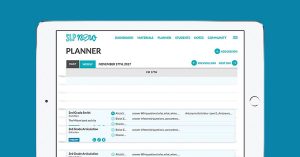
I use SLP Now to plug specific activities directly into my therapy plans, so the connection between “what the class is doing” and “what we’re doing in speech” doesn’t live only in my head. If you’re also managing big groups with different goals pulling from different classroom content, this guide to running effective therapy when time is tight is worth a look.
Where SLPs Get Stuck
A few honest friction points worth naming:
Curriculum access is inconsistent. Not every teacher will proactively share materials with you, and that’s one of the real barriers to CBLI implementation identified in the research. If this is your situation, a short, standing check-in (even five minutes every couple of weeks) tends to work better than waiting for materials to come to you.
It’s easy to let this eat your paperwork time. Curriculum-based therapy adds planning steps on top of everything else already competing for your week. If paperwork is already the thing keeping you up at night, this framework for paperwork planning and this approach to caseload vs. workload are good next reads.
The evidence base is still growing. Curriculum-based language intervention is well-supported in theory and by law, but researchers are candid that more evidence is still needed to guide exactly how it’s best implemented in early elementary settings. That’s not a reason to avoid it. It’s a reason to keep your own data collection tight, so you can see what’s actually working for your students.
Start Small
You don’t need to overhaul your entire practice this week. Pick one piece, your materials, your data system, or your classroom-materials folder, and set it up first. Once one piece is solid, the next one is a lot easier to build.
References
Individuals with Disabilities Education Act (IDEA), 2004; American Speech-Language-Hearing Association. (n.d.). School-Based Service Delivery in Speech-Language Pathology. https://www.asha.org/slp/schools/school-based-service-delivery-in-speech-language-pathology/
American Speech-Language-Hearing Association. (n.d.). Caseload and Workload. Practice Portal. https://www.asha.org/practice-portal/professional-issues/caseload-and-workload/
Meaux, A. B., & Norris, J. A. (2018). Curriculum-based language interventions: What, who, why, where, and how? Language, Speech, and Hearing Services in Schools, 49(2), 165–175. https://doi.org/10.1044/2017_LSHSS-17-0057
FAQ
What is curriculum-based therapy in speech-language pathology?
It's an approach where a school-based SLP targets a student's speech and language goals using the content and materials from their general education classroom, like a current book, unit, or lesson, instead of unrelated, isolated materials.
Is curriculum-based therapy required by law?
Not exactly, but it connects closely to IDEA's least restrictive environment requirement, which calls for students to be educated alongside their peers and curriculum whenever appropriate.
How do I organize materials for curriculum-based therapy?
Most SLPs need three organized pieces: a flexible set of core teaching materials, a data collection system tied to student goals, and a dedicated place to store whatever the classroom teacher shares with you.
What's the biggest challenge with curriculum-based therapy?
Inconsistent access to what's happening in the classroom. A short standing check-in with teachers tends to solve this better than waiting for materials to come to you.





Leave a Reply